Category: Arts & Music
Moodle at Eckerd College 2025-26 Academic Year
Search results: 612
Continuation of AB 101. Completion of AB 102 fulfills the one year language requirement. Prerequisite: AB 101.
- Teacher: Tracey Maher
Category: Spring Term 2026
Comprehensive review of grammar and vocabulary. Emphasis on expression and interpretation of meaning in a social context. Practice in reading, writing, speaking, and listening comprehension. Examines dialects of Arabic and related cultural practices. Prerequisite: AB 102.
- Teacher: Tracey Maher
Category: Spring Term 2026
Further development of language skills with emphasis on advanced grammar, increased vocabulary, and competency with authentic texts and media materials. Prerequisite: AB 202.
- Teacher: Tracey Maher
Category: Spring Term 2026
Courses of selected topics will be offered periodically as determined by the needs of the curriculum. Prerequisites can vary based on the topic selected. See individual course listings for each semester for the specific topic and any prerequisites. You can view special topics course descriptions by copying this URL into your internet browser - https://sites.google.com/a/eckerd.edu/registrar/course-descriptions
- Teacher: Madeline Axlund
Category: Spring Term 2026
This course addresses recent global developments in art from 1980 to the present; focus on particular artists, works, and movements will vary. Prerequisite: AH 103A.
- Teacher: Madeline Axlund
Category: Spring Term 2026
This course examines the nuanced scientific skill of conservation efforts within the history of art, with special focus on architecture, illuminated manuscripts, paintings, sculptures, and digital artworks, spanning from the medieval period to the present.
- Teacher: Madeline Axlund
Category: Spring Term 2026
Introduction to the four fields of anthropology: physical, cultural, linguistics, and archaeology. Includes such topics as economy and exchange, religion, political organization, kinship, and gender roles, from a comparative perspective.
- Teacher: Allan Meyers
Category: Spring Term 2026
Introduction to the four fields of anthropology: physical, cultural, linguistics, and archaeology. Includes such topics as economy and exchange, religion, political organization, kinship, and gender roles, from a comparative perspective.
- Teacher: Anna Guengerich
Category: Spring Term 2026
Introduction to the four fields of anthropology: physical, cultural, linguistics, and archaeology. Includes such topics as economy and exchange, religion, political organization, kinship, and gender roles, from a comparative perspective.
- Teacher: Anna Guengerich
Category: Spring Term 2026
Explores the role of archaeology in understanding the human past, including basic concepts in method and theory. Ethical and legal issues surrounding the preservation and interpretation of archaeological sites also examined.
- Teacher: Allan Meyers
Category: Spring Term 2026
Concepts, methods, and theories for understanding human cultural diversity. Includes such topics as economy, kinship, gender roles, political organization, and religion from a comparative perspective.
- Teacher: Jessie Fly
Category: Spring Term 2026
Human ecological dimensions of development, including changing patterns of resource production and consumption. Development that minimizes socioeconomic disparities and environmental impacts, while improving health and reducing poverty. Considers stakeholders in cross-cultural and ethnographic perspective.
- Teacher: Jessie Fly
Category: Spring Term 2026
An introduction to archaeological approaches for reconstructing long-term environmental changes and interpreting the relative impacts of humans. Major concepts include historical ecology, collapse and resilience, niche construction, and the Anthropocene. Includes archaeological methods for environmental reconstruction and major historical changes in human-environmental relations.
- Teacher: Anna Guengerich
Category: Spring Term 2026
Design and implementation of different types of research modes. Field work projects. Prerequisite: AN 201G or permission of instructor.
- Teacher: Jessie Fly
Category: Spring Term 2026
- Teacher: Rebecca Douglass
- Teacher: Dawne Eubanks
- Teacher: Thomas Glowacki
- Teacher: Alfred Gratta
- Teacher: Frederick Green
- Teacher: Kurt Grissom
- Teacher: Sebastian Johnson
- Teacher: Leslie La Barre
- Teacher: Ryan Lambe
- Teacher: David Manson
- Teacher: Antonio Negron
- Teacher: Nicolas Real
- Teacher: Jacob Thonis
- Teacher: Sasha Tuck
- Teacher: Austin Vickrey
- Teacher: Agnieszka Zick
Category: Arts & Music
- Teacher: Betsy Lester
Category: Arts & Music
For the novice or the initiated, an immersion in new ways of seeing, eye-hand coordination, self-discovery, and self- expression through varied drawing media, using as sources the figure, still-life, nature, and imagination.
- Teacher: Joe Skinner
Category: Spring Term 2026
For the novice or the initiated, an immersion in new ways of seeing, eye-hand coordination, self-discovery, and self- expression through varied drawing media, using as sources the figure, still-life, nature, and imagination.
- Teacher: Joe Skinner
Category: Spring Term 2026
For the novice or the initiated, an immersion in new ways of seeing, eye-hand coordination, self-discovery, and self- expression through varied drawing media, using as sources the figure, still-life, nature, and imagination.
Category: Spring Term 2026
For beginners, the fundamentals of ceramic materials, hand forming, recycling, glazing, firing. Laboratories with supervised working time and lectures on technical knowledge and creative problem solving.
- Teacher: Tony Baker
Category: Spring Term 2026
This course will explore relief printmaking, focusing on developing each student’s technical, conceptual, and aesthetic understanding of print media. Instruction on multiple relief printing processes including but not limited to linocut, woodcut and type-high block. Prerequisites: AR 101A and AR 102A.
- Teacher: Joe Skinner
Category: Spring Term 2026
Process, techniques, and aesthetics of making black and white film photographs. No prerequisites, but the student should have access to a 35mm film camera with adjustable aperture and shutter speeds.
- Teacher: Thomas Winchester
Category: Spring Term 2026
Basic elements of graphic design: typography, modern print techniques, illustration, photography in advertising, publishing, mass media. Prerequisites: AR 102A
- Teacher: Rachel de Cuba
Category: Spring Term 2026
The figure remains a vital study for artists, particularly for those whose roots are in the western tradition. Create figurative works in varied 2-d and 3-d media and explore the evolution of figurative imagery in art. Prerequisites: AR 101 and AR 102.
- Teacher: Aimee Jones
Category: Spring Term 2026
Throwing instruction and practice. Skill, aesthetic considerations, techniques and critiques.
- Teacher: Tony Baker
Category: Spring Term 2026
Various techniques from forming through surface finishes. Clay as a sculpture medium from prehistoric through contemporary use, with an emphasis in creative problem solving.
- Teacher: Tony Baker
Category: Spring Term 2026
Independent studio work with regular critiques. Reading and written assignments on art theory and criticism. Class used for review of work, oral presentation, discussion, and field trips. Open to Junior and Senior Visual Arts majors/minors or Interdisciplinary Arts majors/minors only.
- Teacher: Aimee Jones
Category: Spring Term 2026
Continuation of process begun in AR 228. Individual instruction with periodic group critiques. Emphasis on larger scale works and technical appropriateness. Prerequisites: AR 228.
- Teacher: Aimee Jones
Category: Spring Term 2026
Continuation of process begun in AR 327. Individual instruction with periodic group critiques. Emphasis on larger scale works and technical appropriateness. Prerequisites: AR 327.
- Teacher: Aimee Jones
Category: Spring Term 2026
Courses of selected topics will be offered periodically as determined by the needs of the curriculum. Prerequisites can vary based on the topic selected. See individual course listings for each semester for the specific topic and any prerequisites. You can view special topics course descriptions by copying this URL into your internet browser - https://sites.google.com/a/eckerd.edu/registrar/course-descriptions
- Teacher: Rachel de Cuba
Category: Spring Term 2026
In this course, students will create animated graphics and visual effects for film, video, and the web. Students will explore kinetic typography, motion graphics, 2D and 3D animation, compositing, and special effects.
- Teacher: Rachel de Cuba
Category: Spring Term 2026
Ind. Study: Art & Practice
Category: Spring Term 2026
For Senior art majors preparing thesis shows, self- structured time to work, regular weekly meetings, critiques, practice in hanging and criticizing shows. Personal, individual discussion time with instructor. Prerequisite: Senior major in art.
Category: Spring Term 2026
For Senior art majors preparing thesis shows, self- structured time to work, regular weekly meetings, critiques, practice in hanging and criticizing shows. Personal, individual discussion time with instructor. Prerequisite: Senior major in art.
Category: Spring Term 2026
For Senior art majors preparing thesis shows, self- structured time to work, regular weekly meetings, critiques, practice in hanging and criticizing shows. Personal, individual discussion time with instructor. Prerequisite: Senior major in art.
- Teacher: Rachel de Cuba
Category: Spring Term 2026
From traditional crafts to contemporary art, Japan has embraced image-making and symbolism in cultural creation throughout its history. Image-making is the process of creating an image utilizing a variety of media, styles, and processes for compositions to deliberately and intentionally carry meaning for viewers. This spring into summer course will explore the influences of Japanese art traditions on contemporary image-making studio practices in Art & Design.
The spring semester will focus on material experimentation and development of techniques for image making. Readings, screenings and discussions will provide a framework for critically analyzing the art we will encounter abroad, as well as our own work made abroad. Following the on-campus portion of our class we will travel to view and experience the creative culture of Japan. During our travels students will depict their own experience through image-making, developing a project that creatively communicates a self-generated narrative through visual language.
The spring semester will focus on material experimentation and development of techniques for image making. Readings, screenings and discussions will provide a framework for critically analyzing the art we will encounter abroad, as well as our own work made abroad. Following the on-campus portion of our class we will travel to view and experience the creative culture of Japan. During our travels students will depict their own experience through image-making, developing a project that creatively communicates a self-generated narrative through visual language.
- Teacher: Rachel de Cuba
Category: Spring Term 2026
Hogarth, Reynolds, Turner, WHistler, and others. Collections of George III, Sir John Soane, Duke of Wellington and other connoisseurs of the period discussed. Visits to museums and galleries.
- Teacher: Anne Haworth
Category: Spring Term 2026
Overview of the history of Rome from its legendary beginnings in the eighth century BCE to the fall of the Republic and the ascension of Octavian in 31 BCE. Writing Intensive Course.
- Teacher: Adria Haluszka
Category: Spring Term 2026
Consider representation and treatment of animals in Egyptian, Greco-Roman, and Christian myths, stories, rituals, art, games, etc. What can we learn about ancient societies through their interactions with animals? What can we learn about ourselves?
- Teacher: Adria Haluszka
Category: Spring Term 2026
The interdisciplinary study of animal life history, behavior, and the interactions of humans and other animals. Content areas include conservation, research, zoos and aquariums, animal ethics, and media representation of animals.
- Teacher: Sarah Nadler
Category: Spring Term 2026
The interdisciplinary study of animal life history, behavior, and the interactions of humans and other animals. Content areas include conservation, research, zoos and aquariums, animal ethics, and media representation of animals.
- Teacher: Erin Hills
Category: Spring Term 2026
The interdisciplinary study of animal life history, behavior, and the interactions of humans and other animals. Content areas include conservation, research, zoos and aquariums, animal ethics, and media representation of animals.
- Teacher: Kathryn Hudson
Category: Spring Term 2026
Explores the language and methodology of science, including biology, evolution,, ecology, and conservation, within the context of marine mammal science. Prerequisite: AZ 200 and Sophomore standing.
- Teacher: Megan Kelley
Category: Spring Term 2026
Examines how our representation of animals reflects popular cultural values and affects animal lives. Explores practices like hunting, pet-keeping, farming, and animals in entertainment through critical examination of television, movies, the Internet, and other media.
- Teacher: Amanda Hagood
Category: Spring Term 2026
Explores how U.S. law reflects society's views of animals and affects animal lives. Covers important legislation (like the Animal Welfare Act), legal concepts (like "animal rights"), and legal advocacy efforts, such as great ape "personhood".
- Teacher: Erin Kidder
Category: Spring Term 2026
Explores natural history writing, specifically how scientific understandings of animals, technologies for studying animals, and strategies for writing about animals have co-evolved. Fulfills writing intensive requirement.
- Teacher: Amanda Hagood
Category: Spring Term 2026
Explores natural history writing, specifically how scientific understandings of animals, technologies for studying animals, and strategies for writing about animals have co-evolved. Fulfills writing intensive requirement.
- Teacher: Suzan Harrison
Category: Spring Term 2026
This course explores the social, cultural, historical, and ecological dimensions of human–wildlife relationships globally. Students will analyze the drivers of human-wildlife conflict and coexistence, comparing cultural experiences and challenging assumptions about wildlife perceptions.
- Teacher: Tim Bransford
Category: Spring Term 2026
This course provides theoretical and practical training in the qualitative methodologies used in animal studies research. Students will explore complex phenomena with qualitative methods to gain deeper insights into relationships between humans and other animals. Pre-Requisite: AZ 200
- Teacher: Erin Kidder
Category: Spring Term 2026
The scientific study of animal welfare through assessment of species health, emotional state, and behavior. Emphasis on the development and implementation of welfare assessment methodologies in multiple taxa in human care and the wild. Prerequisite: AZ 200
- Teacher: Erin Hills
Category: Spring Term 2026
Examine techniques that zoos and aquariums use to engage their guests, connect people to animals, and inspire conservation action. Prerequisites: AZ 200 and Jr/Sr standing.
- Teacher: Arinn Bolin
Category: Spring Term 2026
This course examines sharks primarily through human-focused, cultural, and ethical lenses. Students will explore the anatomical and physiological traits of sharks that influence behavior and shape human-shark interactions in captivity, ecotourism, and media. Weekly topics include global case studies, group projects, interdisciplinary readings, and multimedia activities that investigate the social, ecological, and conservation challenges facing sharks. Students will critically assess how perception, policy, and public narratives contribute to the treatment and survival of these animals. The course supports Animal Studies learning goals by prioritizing human-wildlife relationships, ethics, and interdisciplinary approaches. Designed for students with no biology prerequisites, this course complements marine science offerings by minimizing intensive biological detail while emphasizing conservation, culture, and public perception. Prerequisite: AZ 200
- Teacher: Megan Kelley
Category: Spring Term 2026
Field work which allows for the practical application of Animal Studies principles. Requires 130 hours of supervised work in an animal studies-related setting (fulfills 40 RSL hours). May be repeated for credit (AZ 444). Prerequisites: AZ200, junior standing, and permission of instructor.
- Teacher: Lauren Highfill
Category: Spring Term 2026
Introduction to the biological, behavioral, ethical, and medical aspects of wildlife rehabilitation. Focus will be on Florida species, but global wildlife rehabilitation efforts will also be highlighted. Perquisites: AZ200 and JR/SR standing
- Teacher: Megan Kelley
Category: Spring Term 2026
The interdisciplinary study of animal behavior, emphasizing the underlying functions and mechanisms and of behavior, animal communication systems, animal behavior methodologies, and cultural transmission of behavior across a variety of taxa. Prerequisites: Statistics and AZ200.
- Teacher: Erin Hills
Category: Spring Term 2026
The interdisciplinary study of animal behavior, emphasizing the underlying functions and mechanisms and of behavior, animal communication systems, animal behavior methodologies, and cultural transmission of behavior across a variety of taxa. Prerequisites: Statistics and AZ200.
- Teacher: Tim Bransford
Category: Spring Term 2026
This course provides students with conceptual, methodological, practical, and theoretical training in multispecies ethnography. This qualitative research method facilitates contextual examinations of the human-animal interface and considers (i) how animalsshape human actions, experiences, and identities, and (ii) how they fit withincultural, historical, and other contexts. By exploring these dynamics and critically considering the processes that underlie them, this class encourages the development of new and richer perspectives on a wide range of contexts (including cultural contexts, ethnographic field sites, zoos, aquariums, research labs, veterinary clinics, conservation areas, animal sanctuaries, etc.). It alsodevelops comparative and critical considerations of human-animal intersections in diverse sociocultural contexts while encouraging students toconsider their own experiences and assumptions in the context of a broader multispecies world. Prerequisite: AZ 200 or permission of the instructor.
- Teacher: Kathryn Hudson
Category: Spring Term 2026
This course challenges students to practice critical analysis, perspective-taking, and communication skills surrounding the most controversial animal-related debates, preparing students to facilitate balanced, sensitive, and productive dialogue on polarizing animal topics. Includes multiple field trips. Prerequisite: AZ 200. Open only to students with junior and senior standing.
- Teacher: Sarah Nadler
Category: Spring Term 2026
Practicum in Animal Studies II: Second semester of field work in the community which allows for the practical application of Animal Studies principles. Requires 130 hours of supervised work in an animal-related setting.
- Teacher: Lauren Highfill
Category: Spring Term 2026
Internship
Category: Spring Term 2026
Integrate, discuss and present theories, professional studies and practices from sub-disciplines of Animal Studies. Complete capstone research project to identify and solve problem relevant to issues encountered by professionals in chosen sub-discipline. Prerequisite: AZ 344
- Teacher: Tim Bransford
Category: Spring Term 2026
Integrate, discuss and present theories, professional studies and practices from sub-disciplines of Animal Studies. Complete capstone research project to identify and solve problem relevant to issues encountered by professionals in chosen sub-discipline. Prerequisite: AZ 344
- Teacher: Erin Kidder
Category: Spring Term 2026
Integrate, discuss and present theories, professional studies and practices from sub-disciplines of Animal Studies. Complete capstone research project to identify and solve problem relevant to issues encountered by professionals in chosen sub-discipline. Prerequisite: AZ 344
- Teacher: Lauren Highfill
Category: Spring Term 2026
Integrate, discuss and present theories, professional studies and practices from sub-disciplines of Animal Studies. Complete capstone research project to identify and solve problem relevant to issues encountered by professionals in chosen sub-discipline. Prerequisite: AZ 344
- Teacher: Kathryn Hudson
Category: Spring Term 2026
SPECIAL PERMISSION REQUIRED FROM GLOBAL ED TO REGISTER. UNAPPROVED STUDENTS WILL BE DROPPED.
Animals in London offers a unique opportunity to explore the intricate relationships between humans and animals in urban settings. This interdisciplinary course examines the historical and cultural roles of animals in London through readings, discussions, and hands-on fieldwork. Students will study topics like urban wildlife, biodiversity, animal welfare movements, and artistic representations of animals. The experience culminates in a three-week immersive program, with daily excursions to landmarks such as the Natural History Museum and London Zoo. Additionally, students will participate in a short independent travel component to investigate animal-related themes in another European city, fostering cross-cultural understanding and research skills.
Animals in London offers a unique opportunity to explore the intricate relationships between humans and animals in urban settings. This interdisciplinary course examines the historical and cultural roles of animals in London through readings, discussions, and hands-on fieldwork. Students will study topics like urban wildlife, biodiversity, animal welfare movements, and artistic representations of animals. The experience culminates in a three-week immersive program, with daily excursions to landmarks such as the Natural History Museum and London Zoo. Additionally, students will participate in a short independent travel component to investigate animal-related themes in another European city, fostering cross-cultural understanding and research skills.
- Teacher: Lauren Highfill
Category: Spring Term 2026
This course explores the ways in which sea turtle welfare, conservation, and research take place on-the-ground at the nonprofit LAST, the Latin American Sea Turtle Association, located on the Osa Peninsula in Costa Rica. As a class, we will combine lecture and active engagement to explore the issues sea turtles face today and what we can do to help them. We will learn about sea turtle behavior, biology, and care while staying at a center focusing on research and rehabilitation. Outside of our sea turtle work, we will also explore the various ways LAST engages with the local community and take trips to local spots of cultural and natural importance. This course is highly participatory and every day involves regular physical activity, including work on boats and kayaks and hiking in tropical mountains.
- Teacher: Tim Bransford
Category: Spring Term 2026
This course provides students with a unique opportunity to gain experience in the animal studies field by immersing themselves in the study of the behavior of Amazon River dolphins and the impact of human-animal interactions on their conservation. On campus, students will be introduced to the field methodologies in the study of animal behavior and species local to the Amazon. Then the students will travel to Brazil, where they will travel along the Rio Negro portion of the Amazon River between the cities of Manaus and Novo Airão. While abroad, students will participate in field surveys of Amazon River Dolphins and other animals in this region, and investigate human-animal interactions and their impact on the surrounding environment and community.
- Teacher: Erin Hills
Category: Spring Term 2026
This interdisciplinary course will take place on the Caribbean island of Bonaire, which is surrounded by a marine park. Students will gain a foundational understanding of what climate change is and how it is consequential for corals, insights into coral physiology and ecology, and knowledge of common coral, fish, and invertebrate species on Caribbean reefs. Additionally, students will learn effective communication strategies to relay their knowledge of corals and climate change to others. This course will include extensive diving and an open water or equivalent dive certification (at a minimum) is required for the course. Students will learn and practice data collection on coral health and on public understanding of climate consequences for coral reefs. After gathering and presenting data, students will create a final infographic communication piece to be used by dive facilities as an educational piece for tourists.
- Teacher: Jo Huxster
- Teacher: Cory Krediet
Category: Spring Term 2026
Explore ecotourism while trekking the Amazon Rainforest and exploring the natural wonders of the Galápagos Islands!
This course will introduce the interdisciplinary nature of business management and environmental studies, as we examine the socioeconomic and environmental impacts of the ecotourism industry in Ecuador and the Galápagos. While abroad, students will investigate various tourism business models, analyze the success of each model, and consider the influence of these models on the surrounding environment and community. Students will engage with local tour operators, entrepreneurs, and other community members. Finally, students will work together to propose new, innovative ecotourism business models for Ecuador.
This course format will include preparatory lectures on campus, deep on-site experiential learning in Ecuador, and project presentations upon our return. Our time in Ecuador will include long periods of hiking the country’s unique terrain (e.g., rainforests, volcanoes, etc.). We will also explore the marine habitat surrounding the Galápagos Islands. Consequently, the ability to hike extended distances and swim proficiently is required.
This course will introduce the interdisciplinary nature of business management and environmental studies, as we examine the socioeconomic and environmental impacts of the ecotourism industry in Ecuador and the Galápagos. While abroad, students will investigate various tourism business models, analyze the success of each model, and consider the influence of these models on the surrounding environment and community. Students will engage with local tour operators, entrepreneurs, and other community members. Finally, students will work together to propose new, innovative ecotourism business models for Ecuador.
This course format will include preparatory lectures on campus, deep on-site experiential learning in Ecuador, and project presentations upon our return. Our time in Ecuador will include long periods of hiking the country’s unique terrain (e.g., rainforests, volcanoes, etc.). We will also explore the marine habitat surrounding the Galápagos Islands. Consequently, the ability to hike extended distances and swim proficiently is required.
- Teacher: Noelle Boucquey
- Teacher: Jennifer Knippen
Category: Spring Term 2026
This course examines the topic of public health in Puerto Rico (PR), primarily focusing on how social, political, and natural environments shape health outcomes in the region. The course entails travel to the beautiful island of PR, where we will primarily stay in San Juan to gain an insider’s perspective of the ongoing public health challenges faced. Morning classes will allow us to discuss possible causes of health problems in the area. We will participate in various cultural activities in the afternoons, including visits to various green and blue spaces that positively impact health (El Yunque National Forest, Luquillo Beach), a local farm trip dedicated to increasing access to healthy food, a low-income health clinic visit, attendance of presentations by local community health organizations, and ongoing observation of how hurricanes have resulted in infrastructural damage, contaminated water, unsafe housing structures, and lack of access to nutritious food.
- Teacher: Amanda Hoffman-Hall
- Teacher: Lisa Miller
Category: Spring Term 2026
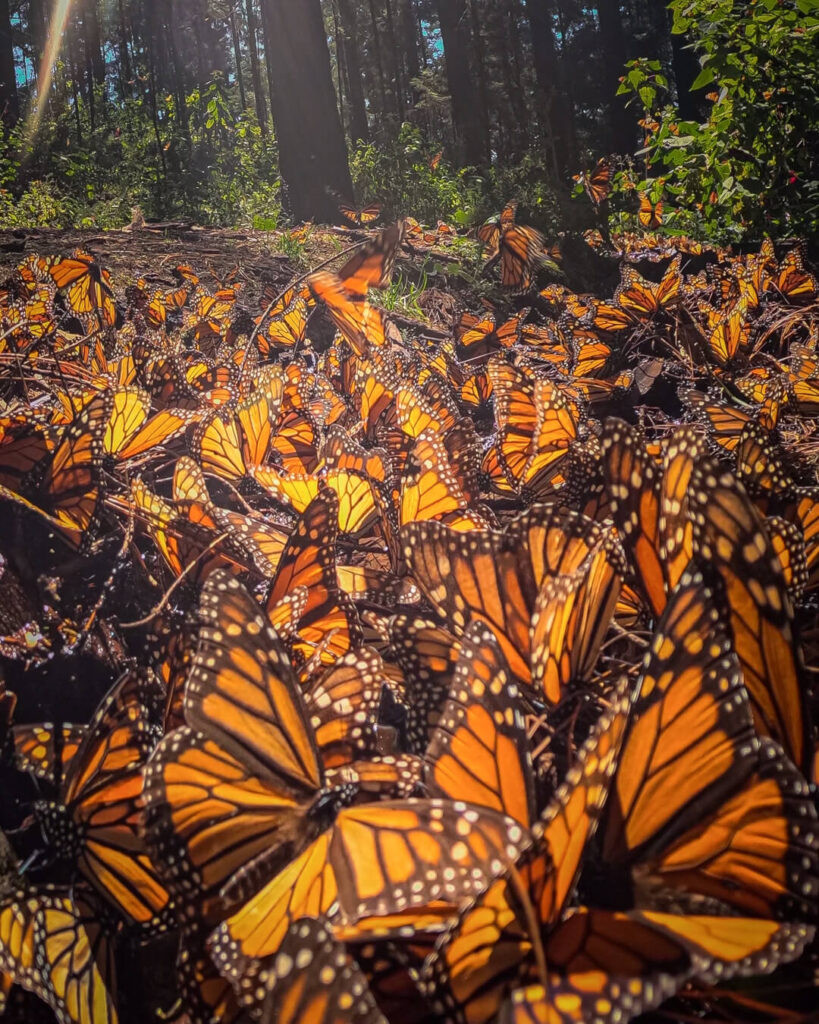
This immersive course offers a comprehensive exploration of Mexico’s rich cultural and natural landscapes, both urban and rural. Based in Mexico City, students will experience a blend of historical and contemporary Mexico, with visits to ancient Aztec ruins, natural hot springs, vibrant food tours, a local professional basketball game, and the chance to view the native axolotls in Lake Xochimilco. The journey will continue westward into the Mexican mountains, where students will explore the Monarch butterfly sanctuaries, located at the southernmost point of their annual migration. Here, they will learn about the vital role these butterflies play in the ecosystem and how tourism is helping to conserve their habitat. Throughout the course, lectures on the natural history of Mexico will complement field experiences. Students will also choose a specific environmental and cultural topic to research while in-country and present their findings upon return to campus.
- Teacher: Evan Bollier
- Teacher: Tyler Cribbs
Category: Spring Term 2026
The Biophilia Hypothesis illuminates that humans have an increased capacity for understanding, discovery, and balance when in direct contact with nature. This course travels to explore the possibilities of biophilic self-actualization (acting at one's full potential) through partnership with New Zealand's endemic flora and fauna. While capitalizing on the powers of adventure-based learning, human-animal interactions, and opportunities for immersion, this course will provide the opportunity to increase both insight and skills surrounding personal development. We will study how nature, animals, and associated symbols have influenced humans across time, across cultures, and across a single human's life (yours!). Deepened knowledge of Humanistic and Ecopsychology theory will empower students to consider advanced routes to emotional intelligence, leadership, and environmental conscientiousness, as well as inspire the practice of applied novel approaches to co-occurring global climate and mental health crises. A student in this unique, interdisciplinary course will very personally explore how nature and conservation can impact their growth, development, and worldview. Participation will include guided and responsible excursion options such as mindfulness-based hiking, glass-bottom boat trips, cave abseiling, solo and group meditation, guided participation in local conservation projects, swimming with wild dolphins, a visit to a kiwi hatchery, a ceremony and overnight stay in a Māori village, and more (exact opportunities may vary).
- Teacher: Sarah Nadler
Category: Spring Term 2026
This course introduces students to the threats posed by the technologies we use every day. Students will explore the foundational concepts of computer and information security, common threats such as malware, and the practical tasks required to maintain a basic level of security. Through case studies and hands-on activities, the course will investigate the hackers, cybercriminals, and security professionals behind some of the most jaw-dropping events in our time including the largest bank heist in history, acts of cyberterrorism, and the digital infrastructure supporting global operations in computer crime. By the end of the course, students will appreciate the complexity of securing modern infrastructure in a digital world.
- Teacher: Thomas Lombardi
Category: Spring Term 2026
This course will examine the theoretical applications of psychological science towards a topic of fascination for many, the supernatural! In this course, students will be introduced to and taught basic biopsychological principles. We will then explore supernatural creatures, like vampires and zombies, through their many representations in popular culture. During our examination of these sources, we will discuss the biopsychological mechanisms that could theoretically explain these creatures’ supernatural abilities. We will examine how an individual’s behavior transitions from human to superhuman by discussing the necessary changes that would occur in the brain and body to give someone such capabilities. This course will culminate in a project Dr. Frankenstein himself would approve of, where students will develop their own supernatural creature by researching and referencing a variety of popular culture and scientific sources to explain their supernatural creation and how it could *theoretically* exist.
- Teacher: Katherine Dyer
Category: Spring Term 2026
The course examines issues in sport such as performance, discrimination, betting market efficiency and competitive balance.
- Teacher: Thomas Ashman
Category: Spring Term 2026
"Want to know more about the new form of digital money that has taken the world by storm? Better yet, want to design your own cryptocurrency? This course takes you through an economic analysis of cryptocurrencies, that culminates in you designing your own digital token! No prior knowledge of economics or cryptocurrencies is required for you to enjoy this course. We will evaluate if cryptocurrency is money, how it is utilized globally, and what parts of cryptocurrencies are useful when analyzing them.
The course is a mix of lectures, independent work, and group projects. In the lectures we will analyze cryptocurrencies, looking at various sources that range from personal stories with Bitcoin to academic articles addressing the use of cryptocurrencies. Through various projects students will analyze a particular cryptocurrency of their choosing, argue what cryptocurrencies should be classified as, and describe the use of cryptocurrencies in a particular country."
The course is a mix of lectures, independent work, and group projects. In the lectures we will analyze cryptocurrencies, looking at various sources that range from personal stories with Bitcoin to academic articles addressing the use of cryptocurrencies. Through various projects students will analyze a particular cryptocurrency of their choosing, argue what cryptocurrencies should be classified as, and describe the use of cryptocurrencies in a particular country."
- Teacher: Sarah Dean
Category: Spring Term 2026
Introduction to the basic concepts of ecology and evolution and how they relate to the diversity, structure, and function of life on earth.
- Teacher: Jeffrey Goessling
Category: Spring Term 2026
Introduction to the basic concepts of ecology and evolution and how they relate to the diversity, structure, and function of life on earth.
- Teacher: Brian Zielinski
Category: Spring Term 2026
Introduction to the primary concepts of cell biology and the fundamentals of genetics as they relate to the diversity, structure, and function of organisms.
- Teacher: Brian Zielinski
Category: Spring Term 2026
Introduction to the primary concepts of cell biology and the fundamentals of genetics as they relate to the diversity, structure, and function of organisms.
- Teacher: Whitney Bullock
Category: Spring Term 2026
Integrates topics across the biology-chemistry interface: concepts of cell biology, fundamentals of genetics related to diversity, structure, and function of organisms. Co-requisite: CH 123. Prerequisite: CH 121N with minimum grade "C-".
- Teacher: Denise Flaherty
Category: Spring Term 2026
Biology of microorganisms; microbiological techniques, isolation and identification of unknown organisms. Prerequisite: (BI 111N, ES 270N or MS 102N) and (BI 112N or BI 211N)
- Teacher: Steve Denison
Category: Spring Term 2026
Mendelian and transcription genetics from historical perspective. Experimental approach emphasized. Small lab groups participate in experimental design, and develop research skills in both classical genetic systems and molecular biology. The prerequisites: BI112N/BI114 or BI211 with a grade of C- or better.
- Teacher: Liza Conrad
Category: Spring Term 2026
Mendelian and transcription genetics from historical perspective. Experimental approach emphasized. Small lab groups participate in experimental design, and develop research skills in both classical genetic systems and molecular biology. The prerequisites: BI112N/BI114 or BI211 with a grade of C- or better.
- Teacher: Liza Conrad
Category: Spring Term 2026
Mendelian and transcription genetics from historical perspective. Experimental approach emphasized. Small lab groups participate in experimental design, and develop research skills in both classical genetic systems and molecular biology. The prerequisites: BI112N/BI114 or BI211 with a grade of C- or better.
- Teacher: Steve Denison
Category: Spring Term 2026
Mendelian and transcription genetics from historical perspective. Experimental approach emphasized. Small lab groups participate in experimental design, and develop research skills in both classical genetic systems and molecular biology. The prerequisites: BI112N/BI114 or BI211 with a grade of C- or better.
- Teacher: Peter Scott
Category: Spring Term 2026
Mendelian and transcription genetics from historical perspective. Experimental approach emphasized. Small lab groups participate in experimental design, and develop research skills in both classical genetic systems and molecular biology. The prerequisites: BI112N/BI114 or BI211 with a grade of C- or better.
- Teacher: Peter Scott
Category: Spring Term 2026
General principles of evolutionary biology, and of population, community, and ecosystems ecology. Laboratory component includes field work in local terrestrial, freshwater, and marine environments. Prerequisite: BI 212 and Junior or Senior standing.
- Teacher: Nancy Smith
Category: Spring Term 2026
General principles of evolutionary biology, and of population, community, and ecosystems ecology. Laboratory component includes field work in local terrestrial, freshwater, and marine environments. Prerequisite: BI 212 and Junior or Senior standing.
- Teacher: David Durieux
Category: Spring Term 2026
General principles of evolutionary biology, and of population, community, and ecosystems ecology. Laboratory component includes field work in local terrestrial, freshwater, and marine environments. Prerequisite: BI 212 and Junior or Senior standing.
- Teacher: David Durieux
Category: Spring Term 2026
Physiological mechanisms of animals and general principles revealed through application of comparative methods. Creative project lab to develop research skills. Prerequisites: (BI 112N or BI 212) and CH 122.
- Teacher: Jeffrey Goessling
Category: Spring Term 2026
Physiological mechanisms of animals and general principles revealed through application of comparative methods. Creative project lab to develop research skills. Prerequisites: (BI 112N or BI 212) and CH 122.
- Teacher: Philip Gravinese
Category: Spring Term 2026
Physiological mechanisms of animals and general principles revealed through application of comparative methods. Creative project lab to develop research skills. Prerequisites: (BI 112N or BI 212) and CH 122.
- Teacher: Philip Gravinese
Category: Spring Term 2026
Aspects of nutrition for domestic animals including dogs, cats, cattle, horses. Fundamentals of nutrition including vitamins and energetics. Also digestive anatomy and physiology and history of nutrition. Prerequisites: (BI 111N and BI 112N) or (MS 102N and BI 211).
Category: Spring Term 2026
Study the plants of Florida with an emphasis on plant taxonomy, field botany techniques, and local ecosystems. This course will integrate lectures with practical activities and hands-on field trips to local natural areas. Prerequisites: BI 111N, ES 270N, or MS 102N.
- Teacher: Benjamin Chemel
Category: Spring Term 2026
Application of ecological principles to the study of animal behavior. Field course in local terrestrial and marine environments. Prerequisites: Junior standing and (MS 102N and BI 211) or (BI 111N and BI 112N).
- Teacher: Shannon Gowans
Category: Spring Term 2026
An ecological and evolutionary approach to parasitism. A broad survey of parasites of humans and animals, with emphasis on parasite life cycles and anatomy. Genetic, immunological, pathological and economic aspects of parasite-host relationships. Prerequisites: BI 212.
- Teacher: Nancy Smith
Category: Spring Term 2026
Focuses on understanding how natural processes recover from a variety of disturbances. Study of practices for restoring ecosystems. A multi-scale approach will be used with distinct emphasis on coastal wetlands. Prerequisites: ES 270N or the combination of (MS 288 or BI 111N) and (MS 289 or BI 112N).
- Teacher: Jeannine Lessmann
Category: Spring Term 2026
Selected topics and techniques from contemporary genetics and molecular biology research. Processing of clinical/environmental specimens, next-generation sequencing analysis, advanced probe-based imaging and microscopy. Prerequisite: BI 212.
- Teacher: Whitney Bullock
Category: Spring Term 2026
Synthesis across the major areas of biology via close reading of the scientific literature, discussions, writing of a scientific review paper, oral presentations and a comprehensive examination. Required for both BA and BS. Seniors only. Prerequisites BI 212.
- Teacher: Denise Flaherty
- Teacher: Peter Scott
Category: Spring Term 2026
Synthesis across the major areas of biology via close reading of the scientific literature, discussions, writing of a scientific review paper, oral presentations and a comprehensive examination. Required for both BA and BS. Seniors only. Prerequisites BI 212.
- Teacher: Jeffrey Goessling
Category: Spring Term 2026
Synthesis across the major areas of biology via close reading of the scientific literature, discussions, writing of a scientific review paper, oral presentations and a comprehensive examination. Required for both BA and BS. Seniors only. Prerequisites BI 212.
- Teacher: Denise Flaherty
Category: Spring Term 2026
Upon invitation, Seniors may design and carry out a creative research program, usually resulting in a written dissertation which is defended in the spring of the senior year.
- Teacher: Denise Flaherty
Category: Spring Term 2026
Upon invitation, Seniors may design and carry out a creative research program, usually resulting in a written dissertation which is defended in the spring of the senior year.
- Teacher: Denise Flaherty
Category: Spring Term 2026
This course examines some of the cultural narratives that have attempted to explain and develop ecological conservation in the nation of Cuba. A main objective of our cultural explorations is to understand how these narratives (in nonfiction essay writing, literature, and documentaries) are analogous to Cuban environmental conservation. One significant fact about Cuban history is this nation’s resilience on how the idea of conservationism has become a main objective of its own cultural politics. We will approach how foreign ecocultural dialogues (in Western scientific scholarship) have contributed to Cuba’s own cultural stance regarding the development of narratives about conservationism, under this dialogical “gaze of the other”. Also, in this course we will examine how scientific, local, and cultural enterprises have met on the grounds of cooperation outside disciplinary boundaries. The students will comprehend that cultural conservation is an absorbed communal process that emerges from the participation of different factors and diverse peoples that are not necessarily divorced.
- Teacher: Axel Presas
Category: Spring Term 2026

In the sweeping stories we tell about European art and ideas, women are often missing. Come contribute to the exciting new push to rethink the histories we pass forward to future generations. Explore Paris as a detective, uncovering and deciphering the fascinating work of overlooked women writers, philosophers and painters from a time when Paris was the largest and most important city in the European world. We’ll trace new narratives on foot, by visiting neighborhoods, museums and other sites across Paris and environs, and by inspecting beautiful antique books and letters in archives. Stay with a French host family, attend French language courses in the mornings, and experience cultural activities in the afternoons—writing your own Parisian story along the way. Carries the Global perspective.
- Teacher: Kate Bastin
- Teacher: Louise Daoust
Category: Spring Term 2026
Students will have an immersive Spanish learning experience in one of Spain’s most beautiful cities. Known for its year-round sunshine and vibrant arts scene, Málaga is ideally situated on Spain’s Mediterranean coast. This program includes Spanish courses for beginning, intermediate, and advanced levels, augmented by homestay language/cultural immersion experience. Students will also engage in cultural activities through afternoon visits to museums and other areas of historic and cultural interest. Weekend excursions will also include an overnight stay in Seville, the picturesque capital of Andalusia, and a day trip to Granada to visit the iconic Alhambra palace.
- Teacher: Cristina Delano
Category: Spring Term 2026
This Winter Term course will return to Australia to study its culture; how it is revealed broadly and through its business, sports and communication. We will travel to Sydney and Melbourne visiting multinational companies, small local businesses, sports events/venues as well as historical and popular cultural sites. Our Primary objective is to understand the many aspects of Australian culture through excursions/tours, classroom learning, and direct contact with local companies, organizations and individual Aussies.
- Teacher: Robert Jozkowski
Category: Spring Term 2026
This course explores the history and cultural heritage of The Bahamas through an archaeological investigation of its plantation past. Students participate in a field study near the modern settlement of Port Howe, Cat Island. Course content introduces students to the ways in which archaeology can serve heritage management priorities. Through field activities, students become familiar with basic methods of archaeological survey, empirical data collection, and analysis. In addition, they consider broader heritage issues, including local attitudes toward the preservation and stewardship of physical remains related to slavery. Community stakeholders are involved in the endeavor, and high schoolers are expected to join the Eckerd group for a few days. Set against a backdrop of subtropical forest and limestone hills, the fieldwork will at times be demanding. Consequently, good physical condition is necessary.
- Teacher: Allan Meyers
Category: Spring Term 2026
Study Chinese language in Taipei while exploring this capital of Taiwan—the cultural, economic, and political center of the island. Nestled on the Tamsui River, this historic metropolis blends East and West, tradition and modernity. Students will attend Mandarin classes at National Taiwan Normal University in the mornings and participate in cultural activities and excursions in the afternoons and on weekends. A variety of Chinese cultural activities are available, such as tea ceremony, Chinese cooking, and Chinese kungfu. There are also opportunities to learn about Taiwan’s culture through field trips to Jiufen and so on. Known for its cuisine and street food, Taipei is a city where students will enjoy exploring its lively night markets.
- Teacher: Jing Shen
Category: Spring Term 2026
In this WT program students will have an immersive Spanish learning experience in one of Latin America’s most emblematic cities. Known as “the Paris of the Americas” for its elegant architecture and status as an international hub, Buenos Aires is a lively, cosmopolitan, and culturally diverse city that is an ideal location to learn Spanish.
- Teacher: Maribel Perez
- Teacher: Talina Ugarte
Category: Spring Term 2026
This class explores what we can learn about human societies through foodways of the past. The course is built around four meals that we will cook and eat together, representing cultural contexts such as Indigenous Mexico, ancient Rome, Native American foraging, and the African Diaspora. Through readings, films, and discussions focused on each of these cultural contexts, we will explore what they can tell us about broader anthropological questions such as health, sustainability, biodiversity, inequality, and imperialism.
- Teacher: Anna Guengerich
Category: Spring Term 2026
Unleash your unique spark with a personal branding course. In a world where individuality reigns supreme, your personal brand is your ultimate superpower. In this practical course, students learn by doing, and watch their personal brands evolve in real-time through a combination of home assignments, in-class activities, a computer simulation, and individual projects. Evaluate your skills, find your unique voice, and learn how to use AI tools to build your own standout personal branding portfolio.
- Teacher: Gemma Fountain
Category: Spring Term 2026
Modern finance is not just about numbers — it’s about behavior, ethics, and innovation. This course examines how human psychology, institutional incentives, and emerging technologies shape and even sometimes break financial systems. Through daily discussion, case analysis, and an immersive trading simulation, students will learn how risk, regulation, and technology interact to create the global financial system.
Category: Spring Term 2026
Examines modern chemical theory including stoichiometry, gas laws, atomic structure and bonding, and solutions. Prerequisites: high school chemistry and three years of high school mathematics or CH 110N with a grade of C- or better.
- Teacher: Katya Nacheva
Category: Spring Term 2026
Topics include kinetics, thermodynamics, chemical equilibria, ionic equilibria, acid-base chemistry, electrochemistry, descriptive inorganic chemistry, and nuclear chemistry. Prerequisite: General Chemistry I with a grade of C- or better.
- Teacher: Polina Maciejczyk
Category: Spring Term 2026
Topics include kinetics, thermodynamics, chemical equilibria, ionic equilibria, acid-base chemistry, electrochemistry, descriptive inorganic chemistry, and nuclear chemistry. Prerequisite: General Chemistry I with a grade of C- or better.
- Teacher: Chris Schnabel
Category: Spring Term 2026
Topics include kinetics, thermodynamics, chemical equilibria, ionic equilibria, acid-base chemistry, electrochemistry, descriptive inorganic chemistry, and nuclear chemistry. Prerequisite: General Chemistry I with a grade of C- or better.
- Teacher: Chris Schnabel
Category: Spring Term 2026
Topics include kinetics, thermodynamics, chemical equilibria, ionic equilibria, acid-base chemistry, electrochemistry, descriptive inorganic chemistry, and nuclear chemistry. Prerequisite: General Chemistry I with a grade of C- or better.
- Teacher: Jeff Romine
Category: Spring Term 2026
Topics include kinetics, thermodynamics, chemical equilibria, ionic equilibria, acid-base chemistry, electrochemistry, descriptive inorganic chemistry, and nuclear chemistry. Prerequisite: General Chemistry I with a grade of C- or better.
- Teacher: Greg Felton
Category: Spring Term 2026
Topics include kinetics, thermodynamics, chemical equilibria, ionic equilibria, acid-base chemistry, electrochemistry, descriptive inorganic chemistry, and nuclear chemistry. Prerequisite: General Chemistry I with a grade of C- or better.
- Teacher: Katya Nacheva
Category: Spring Term 2026
Topics include kinetics, thermodynamics, chemical equilibria, ionic equilibria, acid-base chemistry, electrochemistry, descriptive inorganic chemistry, and nuclear chemistry. Prerequisite: General Chemistry I with a grade of C- or better.
- Teacher: Polina Maciejczyk
Category: Spring Term 2026
Topics include kinetics, thermodynamics, chemical equilibria, ionic equilibria, acid-base chemistry, electrochemistry, descriptive inorganic chemistry, and nuclear chemistry. Prerequisite: General Chemistry I with a grade of C- or better.
- Teacher: Katya Nacheva
Category: Spring Term 2026
Topics include kinetics, thermodynamics, chemical equilibria, ionic equilibria, acid-base chemistry, electrochemistry, descriptive inorganic chemistry, and nuclear chemistry. Prerequisite: General Chemistry I with a grade of C- or better.
- Teacher: Katya Nacheva
Category: Spring Term 2026
Topics include kinetics, thermodynamics, chemical equilibria, ionic equilibria, acid-base chemistry, electrochemistry, descriptive inorganic chemistry, and nuclear chemistry. Prerequisite: General Chemistry I with a grade of C- or better.
- Teacher: Jeff Romine
Category: Spring Term 2026
Topics include kinetics, thermodynamics, chemical equilibria, ionic equilibria, acid-base chemistry, electrochemistry, descriptive inorganic chemistry, and nuclear chemistry. Prerequisite: General Chemistry I with a grade of C- or better.
- Teacher: Polina Maciejczyk
Category: Spring Term 2026
Topics include kinetics, thermodynamics, chemical equilibria, ionic equilibria, acid-base chemistry, electrochemistry, descriptive inorganic chemistry, and nuclear chemistry. Prerequisite: General Chemistry I with a grade of C- or better.
- Teacher: Jeff Romine
Category: Spring Term 2026
Integrates topics across biology-chemistry interface: chemical kinetics, thermodynamics, chemical equilibria, ionic equilibria, acid-base chemistry, electrochemistry, and descriptive inorganic chemistry. Co-requisite: BI 114. Prerequisite: CH 121N with minimum grade "C-".
- Teacher: Crystal Young-Erdos
Category: Spring Term 2026

Examination of wave mechanics, chemical bonding, atomic and molecular spectroscopy, statistical thermodynamics and some molecular symmetry. Prerequisite: CH 321 with a grade of C- or better.
- Teacher: Joseph Larkin
Category: Spring Term 2026
Practical application of modern experimental techniques and modern chemical instrumentation. Required of all chemistry and biochemistry majors, normally in the Junior year. Prerequisite: CH 212 and PH 242 with grades of C- or better in each.
- Teacher: Greg Felton
Category: Spring Term 2026
Investigate chemical interactions between drug molecules and cellular receptors. Explore how chemical properties affect drug activity. Understand processes of drug discovery and development. Prerequisites: CH 222, BI112N or BI211, and Junior or Senior standing.
- Teacher: Benjamin Chemel
Category: Spring Term 2026
A continuation of CH 415. Biosynthesis of macromolecular precursors, in-depth study of genetic functions, and interactions between conformations of the macromolecules and their roles in metabolism and physiological processes. Prerequisite: CH 415.
- Teacher: Crystal Young-Erdos
Category: Spring Term 2026
Structures, reactions, thermodynamic and physical properties of the elements and compounds. Development of group molecular orbital theory. Survey of molecular and solid state structures, transition metal complexes, main group compounds, organometallics, electronic spectroscopy, catalysis. Prerequisites: CH 321 and CH 326.
- Teacher: Chris Schnabel
Category: Spring Term 2026
Overview of the subject matter, history, and the prevailing theories that define communication studies. Theories about the individual, society, and media, emphasizing research, rhetoric, and analysis. Provides a foundation for advanced study in core upper-level courses.
- Teacher: Laura Pollom
Category: Spring Term 2026
This course surveys fundamental oral communication concepts with an emphasis on developing effective public speaking skills. individual speech critiques.
- Teacher: Laura Pollom
Category: Spring Term 2026
Oral communication as rational persuasion. Techniques of argument, research, and rebuttal. Participation in debates on issues of campus and global interest. Prerequisites: CM 121 or CM 360A.
- Teacher: James Janack
Category: Spring Term 2026
This course is designed to introduce students to communication skills that will help them excel in their professional lives. Students will learn how to communicate effectively through the use of technology and written, verbal, and nonverbal communication in professional contexts. There will be experiential components to the course involving food on campus. Lab Fee: $50.00
- Teacher: Laura Pollom
Category: Spring Term 2026
Media Ethics is designed to promote greater understanding of moral reasoning and ethical decision-making processes within the fields of journalism, advertising, and public relations.
- Teacher: Janet Keeler
Category: Spring Term 2026
Senior Comprehensive Course offers instruction in one or more approaches to communication research. Emphasizes critical thinking and analysis of communication phenomena and articulating communication/critique of research to an audience of critical peers. Prerequisite: Senior standing.
- Teacher: James Janack
Category: Spring Term 2026
Continuation of CN 101. This course covers more sentence patterns and everyday life topics. Prerequisites: CN 101 or permission of instructor.
- Teacher: Jing Shen
Category: Spring Term 2026
Experience contemporary Chinese pop culture through fiction, popular/rock music, TV drama, and films in a global context. The literary, musical and visual works will demonstrate the artistic trends and the consumers' taste in the commercialized society.
- Teacher: Jing Shen
Category: Spring Term 2026
Introduction to writing processes: pre-writing, drafting, revising, editing. Development of a personal voice to express ideas and values. Journal, academic essays, proper use of resources, including documentation.
- Teacher: Jessica Bergamino
Category: Spring Term 2026
Introduction to writing processes: pre-writing, drafting, revising, editing. Development of a personal voice to express ideas and values. Journal, academic essays, proper use of resources, including documentation.
- Teacher: Erika Spohrer
Category: Spring Term 2026
Introduction to writing processes: pre-writing, drafting, revising, editing. Development of a personal voice to express ideas and values. Journal, academic essays, proper use of resources, including documentation.
- Teacher: Erika Spohrer
Category: Spring Term 2026
Critical reading and analysis of texts, with attention to audience, organization, evidence, persuasion. Collegiate research report: research questions, writing from sources, presenting evidence logically.
- Teacher: Suzan Harrison
Category: Spring Term 2026
Critical reading and analysis of texts, with attention to audience, organization, evidence, persuasion. Collegiate research report: research questions, writing from sources, presenting evidence logically.
- Teacher: Zachary Dobbins
Category: Spring Term 2026
Investigation and practice of some of the many ways that people write about the environment, including the personal essay, advocacy writing, environmental journalism, environmental history, and scientific writing.
- Teacher: Zachary Dobbins
Category: Spring Term 2026
Investigation and practice of some of the many ways that people write about the environment, including the personal essay, advocacy writing, environmental journalism, environmental history, and scientific writing.
- Teacher: Zachary Dobbins
Category: Spring Term 2026
Scientific, political, aesthetic, spiritual, ethical discourse, and media images have contributed to diverse understandings of the natural world. Examine the way different readings can create varied and contradictory values and beliefs about the environment. Writing Intensive.
- Teacher: Suzan Harrison
Category: Spring Term 2026
Music, Identity, and Disney
Category: Spring Term 2026
Teaching Shadow
Category: Spring Term 2026
SPECIAL PERMISSION REQUIRED TO REGISTER. UNAPPROVED STUDENTS WILL BE DROPPED.
Continuation of the Resident Advisor Internship. Two semesters required for one course credit. Prerequisite: CR1 305.
Continuation of the Resident Advisor Internship. Two semesters required for one course credit. Prerequisite: CR1 305.
Category: Spring Term 2026
This course serves the advanced student writer as a gateway into the Writers in Paradise conference at Eckerd College, which is the primary experience of the course. However, in addition to attending all events at the conference, students will meet the class for a normative workshop experience, designed to allow the student participant to make the best use of the conference, the panels, and the conference workshop. Permission of instructor required.
- Teacher: Jessica Bergamino
Category: Spring Term 2026
This class teaches the art of creating animal forms using clay, focusing on fundamental techniques on shaping, molding and detailing substantial clay sculptures. Students will dive into intricacies of anatomy and expression capturing the essence of each unique and creative creature.
- Teacher: Tony Baker
Category: Spring Term 2026
Applies principles of improvisation in theatre to the relationships and situations of your life. We will play theatre games such as PowerPoint Karaoke or Story Story Die in order to learn fundamental principles of improv and conventions for theatre games. We will also apply these principles to such areas of life as entrepreneurship, leadership, teamwork, and effective communication. Students will create short form improvisations in class and explore short selections of literature in business, psychology, and communication in order to understand—and ultimately practice—more effective generation, organization, and presentation of ideas in various contexts, as well as increased optimization when working in a group.
- Teacher: Antonia Krueger
Category: Spring Term 2026

From sneakers to jerseys fashion and design have become intrinsically tied to
contemporary sports apparel. In this course we will study the historic connections and
brand development that have created the iconic names we wear today. Focusing on our
limited-edition driven culture of customization students will explore how fashion, design
and sports intersect through readings, film, and case studies of iconic campaigns.
Students will learn design thinking processes as well as customization techniques
through hands on activities culminating in the creation of their own custom sportswear.
contemporary sports apparel. In this course we will study the historic connections and
brand development that have created the iconic names we wear today. Focusing on our
limited-edition driven culture of customization students will explore how fashion, design
and sports intersect through readings, film, and case studies of iconic campaigns.
Students will learn design thinking processes as well as customization techniques
through hands on activities culminating in the creation of their own custom sportswear.
- Teacher: Rachel de Cuba
Category: Spring Term 2026
Basic problem solving and algorithm development using an object-oriented computer programming language as a tool to implement solutions for numeric and non-numeric applications. For students in all majors who want to acquire programming and computer skills.
- Teacher: Kelly Debure
Category: Spring Term 2026
A course in computer programming with a focus on object-oriented programming, component interactions, and software development; classes and methods, dependencies, data collections, runtime exceptions, logic and problem solving. Prerequisites: Mathematics placement at the calculus ready level or equivalent, and prior programming experience in an object-oriented language.
- Teacher: Holger Mauch
Category: Spring Term 2026
Continuation of program design and algorithm analysis. Identification and evaluation of classes of problems solvable through well-defined data structures, object oriented programming, and algorithms including stacks, recursion, lists, linked lists, trees, searching and sorting. Prerequisite: CS 143.
- Teacher: Holger Mauch
Category: Spring Term 2026
Theoretical and mathematical basis of algorithm design and analysis. Prerequisites: CS 150M and CS 221N.
- Teacher: Holger Mauch
Category: Spring Term 2026
Introduction to the methods, processes, algorithms, and tools used in data science. Students will use data science to explore contemporary problems in science, business, and public policy. Prerequisite: CS120 or CS143.
- Teacher: Michael Hilton
Category: Spring Term 2026
Capstone course in computer science that involves participation in a real-world software project. Students will discuss and apply modern software development principles, methodologies, and tools.
Category: Spring Term 2026
Capstone course in computer science that involves participation in a real-world software project. Students will discuss and apply modern software development principles, methodologies, and tools. This course will also encompass the comprehensive examination requirement for graduation.
- Teacher: Michael Hilton
Category: Spring Term 2026
Research and write a thesis under the direction of a member of the Computer Science faculty. Satisfies the comprehensive examination requirement for graduation. Prerequisites: excellence in computer science courses through the Junior year and invitation by the faculty.
Category: Spring Term 2026
For Junior and Senior computer science majors. One course credit on satisfactory completion of two years of participation. Continuation in seminar contingent on satisfactory progress in upper division courses.
- Teacher: Kelly Debure
Category: Spring Term 2026
For Junior and Senior computer science majors. One course credit on satisfactory completion of two years of participation. Continuation in seminar contingent on satisfactory progress in upper division courses.
- Teacher: Kelly Debure
Category: Spring Term 2026
Continuation of Computer Science Seminar. Four semesters required for one course credit. Prerequisite: CS1 410.
- Teacher: Kelly Debure
Category: Spring Term 2026
Continuation of Computer Science Seminar. Four semesters required for one course credit. Prerequisite: CS1 410.
- Teacher: Kelly Debure
Category: Spring Term 2026
Continuation of Computer Science Seminar. Four semesters required for one course credit. Prerequisites: CS1 410 and CS2 410.
- Teacher: Kelly Debure
Category: Spring Term 2026
Continuation of Computer Science Seminar. Four semesters required for one course credit. Prerequisites: CS1 410 and CS2 410.
- Teacher: Kelly Debure
Category: Spring Term 2026
Continuation of Computer Science Seminar. Four semesters required for one course credit. Prerequisites: CS1 410, CS2 410, and CS3 410.
- Teacher: Kelly Debure
Category: Spring Term 2026
Continuation of Computer Science Seminar. Four semesters required for one course credit. Prerequisites: CS1 410, CS2 410, and CS3 410.
- Teacher: Kelly Debure
Category: Spring Term 2026
An introduction to prosody and the craft of poetry in traditional forms. Extensive work in meter and scansion. Write in various forms, e.g., the sonnet, villanelle, ballad, sestina, rondeau, blank verse and others.
- Teacher: Jessica Bergamino
Category: Spring Term 2026
An introduction to scene writing, character development, and other narrative techniques that are commonly applied in the short story, novel, screenplay and an array of other storytelling genres. Students will read published authors, spend the semester crafting their own creative works, and present polished pieces for peer critique.
- Teacher: Jon Chopan
Category: Spring Term 2026
This workshop course examines the building blocks of creative nonfiction: scene making and dialogue, characterization, voice, tone, narrative structure, storytelling craft, ethics, and research. Students explore major subgenres such as memoir, personal essay, literary journalism, and the lyric essay, analyze texts of notable nonfiction writers, and develop their own portfolios of nonfiction.
- Teacher: Christina Lutz
Category: Spring Term 2026
Continued emphasis on the craft of revision, development of an individual voice, critical and analytical writing and speaking. Prerequisite: CW 202A.
- Teacher: Jon Chopan
Category: Spring Term 2026
An immersive workshop focusing on writing across a number of nonfiction forms and their hybrids: personal essay, literary journalism, memoir, and experimental forms. We’ll study and produce our own works in these forms.
- Teacher: Christina Lutz
Category: Spring Term 2026
What does a writing career actually look like? This course moves beyond craft to explore the professional, ethical, and community dimensions of a writing life. Students will investigate diverse career paths, develop practical publishing skills, and examine literary citizenship—how writers engage with and contribute to literary culture. Discover how to participate in literary culture as both artist and citizen. This course fulfills 20 RSL hours.
- Teacher: Christina Lutz
Category: Spring Term 2026
Students will write and revise work in their chosen genre and submit finished pieces for publication.
- Teacher: Jon Chopan
Category: Spring Term 2026
Internship with Eckerd Review is a year-long directed study that examines the conventions and best practices of literary editing and publishing. Students will develop the knowledge, language, and skills necessary to curate, edit, and produce the student-run literary journal, Eckerd Review. Students develop their skills through coursework in the fall semester and put their knowledge to practice in the spring semester. Two semesters required for one credit.
- Teacher: Jessica Bergamino
Category: Spring Term 2026
A practicum with the student newspaper, The Current, including basics in newsroom management, reporting, and writing. Students work on all issues over two semesters, complete formal, complementary coursework, and receive one course credit.
- Teacher: Janet Keeler
Category: Spring Term 2026
Internship with Eckerd Review is a year-long directed study that examines the conventions and best practices of literary editing and publishing. Students will develop the knowledge, language, and skills necessary to curate, edit, and produce the student-run literary journal, Eckerd Review. Students develop their skills through coursework in the fall semester and put their knowledge to practice in the spring semester.
- Teacher: Jessica Bergamino
Category: Spring Term 2026
A practicum with the student newspaper, The Current, including basics in newsroom management, reporting, and writing. Students work on all issues over two semesters, complete formal, complementary coursework, and receive one course credit. Prerequisite: CW1 215A.
- Teacher: Janet Keeler
Category: Spring Term 2026
Registration in this course requires pre-approval through the Office of Global Education. Students who register in this course without the appropriate approval will be removed.
This Spring-into-Summer course introduces students to the cultural history and cuisine of South Korea. Explore traditional markets in Seoul and Busan and sample all manner of Korean foods. Spend time in Korea’s “food capital” at Jeonju, visit rice paddies, and make Korean chili paste, kimchi, and Korean dishes like bulgogi and bibimbap. You’ll also visit several historic gardens, stay in a 1200-year old Buddhist mountain temple, and tour the fabulous historic palace and temple complex at Gyeongju. The trip also includes an immersive art and K-Pop experience, and a tour of the DMZ.
This Spring-into-Summer course introduces students to the cultural history and cuisine of South Korea. Explore traditional markets in Seoul and Busan and sample all manner of Korean foods. Spend time in Korea’s “food capital” at Jeonju, visit rice paddies, and make Korean chili paste, kimchi, and Korean dishes like bulgogi and bibimbap. You’ll also visit several historic gardens, stay in a 1200-year old Buddhist mountain temple, and tour the fabulous historic palace and temple complex at Gyeongju. The trip also includes an immersive art and K-Pop experience, and a tour of the DMZ.
- Teacher: Andrew Chittick
Category: Spring Term 2026
Price theory, operation of market system, competitive and monopoly structures, externalities, public goods, common property resources. Applications analyze environmental policy issues and decisions. Credit will be given for only one of EC 280S or EC 281S.
- Teacher: Sarah Dean
Category: Spring Term 2026
Price theory, operation of market system, competitive and monopoly structures, externalities, public goods, common property resources. Applications analyze environmental policy issues and decisions. Credit will be given for only one of EC 280S or EC 281S.
- Teacher: Sarah Dean
Category: Spring Term 2026
Price theory, operation of market system. Industrial structure and pricing under different competitive structures. Credit will be given for only one of EC 280S or EC 281S.
- Teacher: Jeff Felardo
Category: Spring Term 2026
Main sectors of the economy (consumers, business and government) focusing on policy. Monetary and fiscal policy, inflation, recession, balance of payments. Required for all students majoring in economics.
- Teacher: Jill Collins
Category: Spring Term 2026
Main sectors of the economy (consumers, business and government) focusing on policy. Monetary and fiscal policy, inflation, recession, balance of payments. Required for all students majoring in economics.
- Teacher: Jill Collins
Category: Spring Term 2026
Application of microeconomic principles to contemporary environmental policy issues such as air and water pollution, global climate change, and toxic waste. Exploration of cost benefit analysis and methods to value environmental amenities. Prerequisite: one of EC 201S, EC 280S, or EC 281S.
- Teacher: Jeff Felardo
Category: Spring Term 2026
Continuation of EC 282S. Determinants of aggregate demand and supply, using dynamic and static models of analysis. How to use an understanding of economic analysis to achieve policy objectives and understand trade-offs. Prerequisites: EC 282S and MN 260M.
- Teacher: Diana Fuguitt
Category: Spring Term 2026
Applied economic theory, mathematics, game theory and statistics in business decision making. Optimization techniques under conditions of uncertainty. Selecting the "best" solutions to business problems. Prerequisites: EC 280S (or EC 281S).
- Teacher: Sarah Dean
Category: Spring Term 2026
Theory, currency markets, balance of payments, government macrostabilization policies and exchange rate systems. Bretton Woods, European Monetary System, G5 negotiations, LDC debt, Mexican/Asian crises, international monetary reform. Prerequisites: EC 282S.
- Teacher: Diana Fuguitt
Category: Spring Term 2026
SPECIAL PERMISSION REQUIRED TO REGISTER. UNAPPROVED STUDENTS WILL BE DROPPED.
Required seminar for Juniors in the Eastman Leadership and Citizenship Program. Participation in both fall and spring semesters for a total of one course credit. Prerequisite: EL1 310
Required seminar for Juniors in the Eastman Leadership and Citizenship Program. Participation in both fall and spring semesters for a total of one course credit. Prerequisite: EL1 310
- Teacher: Katti McNally
Category: Spring Term 2026
SPECIAL PERMISSION REQUIRED TO REGISTER. UNAPPROVED STUDENTS WILL BE DROPPED.
Required seminar for Seniors in the Eastman Citizenship and Leadership Program. Participation in both fall and spring semesters for a total of one course credit.
Required seminar for Seniors in the Eastman Citizenship and Leadership Program. Participation in both fall and spring semesters for a total of one course credit.
- Teacher: Katti McNally
Category: Spring Term 2026
This course uses the Ice House Entrepreneurship Program (Academic Edition) and is designed to inspire and engage students in the fundamental aspects of an entrepreneurial mindset as an essential life skill. The course provides experiential learning in business development through the process of identifying problems, finding solutions and making connections beyond the classroom.
- Teacher: Matthew Karlesky
Category: Spring Term 2026
Entrepreneurial Experience Lab
Category: Spring Term 2026
Explore the features of purpose-driven businesses and entrepreneurial nonprofits, exploring various social enterprise models making tangible and scalable progress in serving the world’s most vulnerable populations (human, animal, and environmental). Develop entrepreneurial skills through the development of a hypothetical enterprise.
- Teacher: Jennifer Knippen
Category: Spring Term 2026
Entrepreneurial thought put into practice by developing a business plan and
launching a hypothetical enterprise. Prerequisites: MN 272S and EN 320.
launching a hypothetical enterprise. Prerequisites: MN 272S and EN 320.
- Teacher: Jennifer Knippen
Category: Spring Term 2026
Such topics as conserving biological diversity, sustaining energy, shaping cities, strengthening global environmental governance. Human roles and responsibilities, the scientific, political, economic, and ethical issues involved in the attainment of a sustainable future.
- Teacher: Jo Huxster
Category: Spring Term 2026
Such topics as conserving biological diversity, sustaining energy, shaping cities, strengthening global environmental governance. Human roles and responsibilities, the scientific, political, economic, and ethical issues involved in the attainment of a sustainable future.
- Teacher: Tyler Cribbs
Category: Spring Term 2026
Introduction to major topics in geology, oceanography, meteorology, and astronomy, the natural forces that shape our physical environment, in order to appreciate and preserve the planet.
- Teacher: Amanda Hoffman-Hall
Category: Spring Term 2026
Learn basic design principles and apply these principles to product, building, neighborhood, and energy system design with a focus on minimizing environmental impact.
- Teacher: Jesse Sherry
Category: Spring Term 2026
An introduction to the fundamentals of coastal management principles and practices by examining marine parks, mariculture, international marine affairs and coastal environmental activism.
- Teacher: Tyler Cribbs
Category: Spring Term 2026
An introduction to the fundamentals of coastal management principles and practices by examining marine parks, mariculture, international marine affairs and coastal environmental activism.
- Teacher: Tyler Cribbs
Category: Spring Term 2026
Study of ways in which humans affect and are affected by the environment, with focus on biology. General ecology, population, genetics, identification, and use of natural resources, pollution, social institutions, ethics.
- Teacher: Beth Forys
Category: Spring Term 2026
Birds that are dependent on the water for food have unique biological challenges and adaptions. This class will be a blend of in-class lectures and discussion, field trips, and service learning.
- Teacher: Beth Forys
Category: Spring Term 2026
Introduction to wildlife policies and contemporary social and political debates in wildlife management. Conduct case study analysis, critically evaluate real-world wildlife dilemmas, and make reasoned recommendations regarding policy actions. Prerequisites: sophomore standing and ES 172.
- Teacher: Noelle Boucquey
Category: Spring Term 2026
Investigate the diversity of movements aimed at enhancing the equity and environmental sustainability of food systems. Students will critically evaluate these movements and apply their understanding to local food initiatives. Prerequisite: ES 172.
- Teacher: Dave Himmelfarb
Category: Spring Term 2026
Learn geographic information system (GIS) theory and applications specifically related to the study of the environment through lecture and hands-on work. Prerequisite: ES 172 or MS 101N.
- Teacher: Jesse Sherry
Category: Spring Term 2026
Learn geographic information system (GIS) theory and applications specifically related to the study of the environment through lecture and hands-on work. Prerequisite: ES 172 or MS 101N.
- Teacher: Jesse Sherry
Category: Spring Term 2026
Learn geographic information system (GIS) theory and applications specifically related to the study of the environment through lecture and hands-on work. Prerequisite: ES 172 or MS 101N.
- Teacher: Kelly Debure
Category: Spring Term 2026
Learn geographic information system (GIS) theory and applications specifically related to the study of the environment through lecture and hands-on work. Prerequisite: ES 172 or MS 101N.
- Teacher: Jeff Felardo
Category: Spring Term 2026
Comprehensive overview of the relationship between the environment and human health from global to local scales. Topics include water and sanitation, infectious diseases, solid waste management, food safety, toxicology, risk assessment, and other environmental hazards.
Prerequisites: ES 172, BI112, or PU201S.
Prerequisites: ES 172, BI112, or PU201S.
- Teacher: Amanda Hoffman-Hall
Category: Spring Term 2026
Apply the key question of political ecology (how power shapes social-ecological relationships) to the Gulf region. Use political ecology theory to analyze challenges in the Gulf region and propose solutions. Prerequisite: Sophomore Standing
- Teacher: Noelle Boucquey
Category: Spring Term 2026
This course asks: how are fisheries around the globe being governed today, and how might they become more sustainable? Students will critically evaluate the complexities faced by fisheries managers. Prerequisite: ES 172 or AN 210.
- Teacher: Noelle Boucquey
Category: Spring Term 2026
Introduction to the principles of wetland science, including distribution, classification, and function; physical attributes (hydrology, soils, and biogeochemistry); general ecology and biological adaptations of wetland flora; human and natural impacts to wetlands; and restoration. Prerequisite: ES 172, ES 211N or MS 101N, and Junior or Senior Standing.
- Teacher: Hilary Flower
Category: Spring Term 2026
This course will enable students to effectively communicate about climate change to various audiences through the application of primary, cutting edge social science research on public opinion, understanding, acceptance, and action. Prerequisite: ES 172 or ES 317 and Junior or Senior class standing.
- Teacher: Jo Huxster
Category: Spring Term 2026
Employ environmental studies research and analysis skills to complete an original research project; critique academic research; complete an environmental internship. Comprehensive exams on key methods and topics in environmental studies.
- Teacher: Hilary Flower
Category: Spring Term 2026
Employ environmental studies research and analysis skills to complete an original research project; critique academic research; complete an environmental internship. Comprehensive exams on key methods and topics in environmental studies.
- Teacher: Hilary Flower
Category: Spring Term 2026
An optional freshman course held during winter term, the Leadership and Self-Discovery Program enables students to develop a better understanding of their own personal attributes and possibilities while improving their learning skills, life planning skills, and leadership skills. By permission of instructor only.
- Teacher: April Schwarzmueller
Category: Spring Term 2026
How do we use language to express who we are and connect with others? How and why does
our language change when we’re with different people? Can adopting a new language change
our sense of self and belonging? How is the use of AI changing the way we speak? How do we
judge others by the way they speak? In this course we will explore language and its role in
shaping and expressing our identity. Topics include language varieties, discourse communities,
and multimodal discourse.
our language change when we’re with different people? Can adopting a new language change
our sense of self and belonging? How is the use of AI changing the way we speak? How do we
judge others by the way they speak? In this course we will explore language and its role in
shaping and expressing our identity. Topics include language varieties, discourse communities,
and multimodal discourse.
- Teacher: Kristy Cardellio
Category: Spring Term 2026
Pirates are an inherently exciting subject of study because of their romantic, swashbuckling, counter-cultural appeal in popular media. But they also turn out to be a great topic for historical research. This course will emphasize pirates in the “Age of Sail,” the years 1500-1850 CE, with a focus on cross-cultural comparisons of the structure and economics of pirate communities (including questions of race, gender and sexual orientation) and the relationship between piracy and more “legitimate” forms of order. We will also explore the development of pirate mythology in literature, film, and other media, and its relationship to the reality of the pirate world. Finally, we will investigate recent pirate activities based in Somalia in the light of these historical and romantic traditions.
- Teacher: Andrew Chittick
Category: Spring Term 2026
The aim of this course is to use cosmology as a framework for understanding humanity’s perceived place in the universe and the implications for how to live a good life. Major topics will include how cosmologies have been constructed from ancient times to the present, how this world picture has changed with the advent of the scientific revolution, and how beliefs in the cosmos and the nature of reality influence human/environment relationships. Readings will draw from texts on the history of science, as well as plays, novels, and art. Honors course, but open to all.
- Teacher: Jill Collins
Category: Spring Term 2026
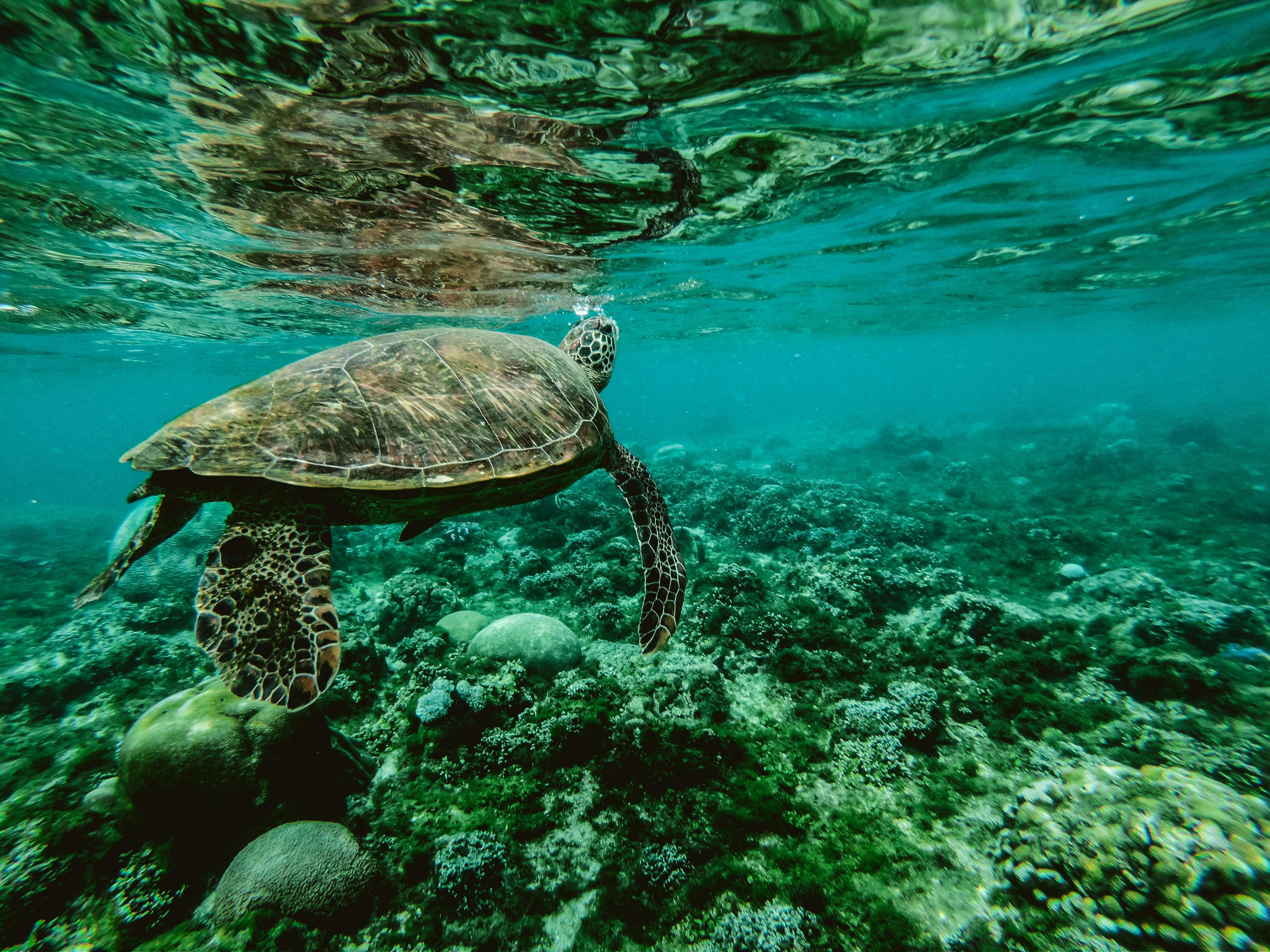
What’s the point of restoration? Should we engineer environmentally resilient marine species?
In this course, we will explore the science, ethics, and conflicting interests associated with
deciding what habitats and species are worthy of restoration.
In this course, we will explore the science, ethics, and conflicting interests associated with
deciding what habitats and species are worthy of restoration.
- Teacher: Philip Gravinese
Category: Spring Term 2026
How should we respond to political and social apathy in today’s society? Reading Don Quixote, students examine how Cervantes’ work reflects on the struggle of idealism in a disillusioned world.
- Teacher: Cristina Delano
Category: Spring Term 2026
We will draw on indigenous authors to ask: how can we embrace more encompassing views
of community, justice, and truth? How do differing ways of knowing and being in indigenous
traditions shape our relationships with non-human entities (e.g., plants, animals, places)?
How can indigenous perspectives help us better understand how human communities relate
to their environments and to each other?
of community, justice, and truth? How do differing ways of knowing and being in indigenous
traditions shape our relationships with non-human entities (e.g., plants, animals, places)?
How can indigenous perspectives help us better understand how human communities relate
to their environments and to each other?
- Teacher: Anna Guengerich
Category: Spring Term 2026
Hurricanes, volcanic eruptions, and earthquakes are often called “natural” disasters, but
are they? This class explores how our social identities, ideas, and inequities determine
the true scale of catastrophe.
are they? This class explores how our social identities, ideas, and inequities determine
the true scale of catastrophe.
- Teacher: Amanda Hoffman-Hall
Category: Spring Term 2026
As the dominant organizational form in contemporary society, corporations exert immense influence over many aspects of our lives. In this course, we will critically examine the ethical responsibilities of corporations to various stakeholders, and to society at large.
- Teacher: Matthew Karlesky
Category: Spring Term 2026
Did you know that sales of homemade pies funded the 1960s Civil Rights Movement? Or that going vegan is a form of protest? In Food Fight! Feeding Resistance and Revolution students will discover how everyday people have come together to resist and protest by using food as a change agent. For the culminating project, empowered students will develop a Food Fight! blueprint to raise awareness and galvanize activists around a social justice issue.
- Teacher: Janet Keeler
Category: Spring Term 2026
How are the arts and crafts being used to speak on behalf of the planet? Learn about how different contemporary arts activism, art therapy, and craftivism movements are intervening to help speak on behalf of the planet, and make your own creative works for positive change.
- Teacher: Antonia Krueger
Category: Spring Term 2026
Our society is saturated with misinformation that uses phony statistics, misleading graphics, and bad science to sound legitimate. Learn to detect and refute quantitative-sounding bullsh$t using basic tools of scientific and data literacy.
- Teacher: Basu Lamichhane
Category: Spring Term 2026
From surveillance videos to smart phones, we are watched constantly. In this course, students explore how spy craft influences our world and worldview.
- Teacher: Thomas Lombardi
Category: Spring Term 2026
We live in scammy times. Calls from unknown numbers, memecoin rug-pulls, AI-generated ads for products that might or might not exist. How do we build social trust, or even be sure of ourselves, in such a world? This course investigates this question through a study of con men. We will study history, psychology, anthropology, film, and literature, culminating with Herman Melville's 1857 novel The Confidence-Man.
- Teacher: Charlie McCrary
Category: Spring Term 2026
Think the government is broken? Hate politicians? Believe you could do better? Now’s your chance to prove it. Join us as we explore how our government was built–and then try to build a better one.
- Teacher: Katti McNally
Category: Spring Term 2026
A Duke Ellington jazz standard from 1931 claims that it “don’t mean a thing if it ain’t got that swing.” Swing: style, artistry, pizazz, swag. Maybe even rizz, as young folks say. But how do those things apply to activist art designed to advocate for equality and inclusion? Should that art also “swing”, or does that risk diluting its message? In this class we will explore those questions by looking at the art of the jazz age and, more specifically, the art of the Harlem Renaissance. We’ll look at the poetry, fiction, film, music, dance, paintings, and sculpture of the period to see how Black artists simultaneously attempted to “swing” and forcefully advocate for the elimination of “the color line” (in W.E.B. Du Bois’ words).
- Teacher: Colby Nelson
Category: Spring Term 2026
Looking through the lens of popular film, this course examines the multiple social and political
forces that bring families together or tear them apart. Come join us to explore ways of finding
kinship in these divisive times.
forces that bring families together or tear them apart. Come join us to explore ways of finding
kinship in these divisive times.
- Teacher: Katrin Pesch
Category: Spring Term 2026
FYEs are designed to develop students’ ability to connect large questions of purpose and value to specific problems and areas of knowledge. FYEs help students develop as critical thinkers, problem solvers, and citizens of the local and global community.
- Teacher: Christina Petersen
Category: Spring Term 2026
What is life like when you aren’t free? How do people creatively resist authority? Explore graphic works, memoirs, and films about everyday life in repressive societies to learn what they teach us about power.
- Teacher: Allison Quatrini
Category: Spring Term 2026
If it doesn’t make you feel good, should you do it? Do you suffer from bouts of cruel optimism? The course examines ways happiness is defined and reflected as a concept for understanding the self, others, and the world.
- Teacher: Sarah Lyle
- Teacher: Kat Robinson
Category: Spring Term 2026
What is erotic love? What is friendship? What does it mean to be a citizen? What do any of these practices have to do with how I define myself? In this course, we examine the connections between love, friendship, and citizenship while reading and discussing ancient Greek thinkers such as Homer, Hesiod, Plato and Aristotle.
- Teacher: Jason Sears
Category: Spring Term 2026
How does having diversity help us build community? We will use St. Petersburg as a test case for thinking about diversity from lots of angles - race, gender, immigration status, sexual identity, age and more. Lots of hands-on activities, research, and discussion will help you learn about St. Pete and create ways to continue engaging with St. Petersburg more completely during your four years at Eckerd. This is an Honors Course but is open for all students to enroll.
- Teacher: Dawn Shedden
Category: Spring Term 2026
This seminar studies traditional Chinese fantastic literature based on historical events and folk legends, which ranges from travelling adventures to involved and fierce battles. These masterworks of fiction feature well-known personages in Chinese history and folklore including a magical monkey, a pilgrimage monk, and crafty warriors. The characters and events in those texts have inspired works of various literary and artistic forms, from the first animated feature film in China to video games and Internet fantasy literature today. To investigate how the popular classics have evolved across time and media as fantasy and societal concerns enter the modern era, we will also study their film adaptations.
- Teacher: Jing Shen
Category: Spring Term 2026
How do we balance hope & healing with realism, with an honest accounting of the injustices in our world? This course will explore stories via books, movies, and videos to ask this question. Our course will also think through the kinds of things that catalyze hope and healing, including art, community, love, nature, and language itself: things that remind us how beautiful the world can be.
- Teacher: Erika Spohrer
Category: Spring Term 2026
Do you ever feel like your vote doesn’t “count?” What role does counting and apportioning votes play in carrying out the will of the people in democratic societies? How can we measure whether elections are fair? In this course, we will explore how mathematics are the very foundation of democracy. Honors course, but open to all.
- Teacher: Stephen Weppner
Category: Spring Term 2026
This course allows selected LSDP participants to gain the experience of facilitating experiential leadership development activities for freshmen. They receive training and experience in planning and delivering the curriculum. They are role models and resources.
- Teacher: April Schwarzmueller
Category: Spring Term 2026
How does a liberal arts education help us turn our interests and passions into future plans? This workshop will highlight tools for self-reflection and designing our best lives in college and beyond. Sophomore students only.
- Teacher: Dawn Shedden
Category: Spring Term 2026
INSTRUCTOR PERMISSION REQUIRED. This course highlights Gulf-focused research on campus across multiple disciplines. Students will use our location as a lens for understanding the environmental, cultural, and social context of the Gulf region and its contemporary challenges.
- Teacher: Amanda Hagood
Category: Spring Term 2026
Senior capstone course attending to debates about the nature of justice and its relevance for social and personal issues, and deploying diverse disciplinary materials and methodologies to elicit deeper reflection on contemporary issues of importance.
- Teacher: Margret Skaftadottir
Category: Spring Term 2026
Senior capstone course attending to debates about the nature of justice and its relevance for social and personal issues, and deploying diverse disciplinary materials and methodologies to elicit deeper reflection on contemporary issues of importance.
Category: Spring Term 2026
Continuation of the year-long Peer Mentoring Internship class designed to link upperclass and first year students to develop interpersonal communication and group leadership skills. Peer mentors are nominated by faculty and invited by permission of instructor only. Two semesters required for one course credit.
- Teacher: Margie Sanfilippo
Category: Spring Term 2026
Leadership in Peer Mentoring is designed to further develop the leadership skills in students who have previously completed the Peer Mentor Internship. Lead peer mentors are invited by permission of instructor only. Two semesters required for one course credit.
- Teacher: Margie Sanfilippo
Category: Spring Term 2026
Reproductive rights encompass a wide range of issues in addition to regulating pregnancy: in vitro fertilization, health care during pregnancy, sperm donation, egg donation, forced sterilization, adoption laws and gender identity. This course will be a survey of law and medicine in the US over the past 20 years, reviewing how ideological, religious, and social values challenged the rights and obligations of motherhood and fatherhood. The biological facts of reproduction will also be examined.
- Teacher: Jane Petro
Category: Spring Term 2026
This mission-critical course prepares students to tackle all stages of website writing, including creating a mock company; developing a sitemap and selecting keywords for SEO; writing polished and creative website pages and blogs; and creating contact forms to generate leads. We approach the task in a structured manner that empowers writers to develop the skills it takes to develop original websites that can be used for personal or professional purposes. The step-by-step method ensures progress proceeds at a manageable pace with a solid plan for project management in place. Technical experience and experience writing for online audiences is not required.
Category: Spring Term 2026
This course will explore the human ecology of Tampa Bay and the nature of environmental changemaking by immersing students in two environmentally-focused projects: a public engagement campaign about coastal resilience in the city of Gulfport, FL and an exhibit on Pinellas County’s changing environment at Heritage Village in Largo, FL. Students will select which project they would like to pursue and will form project teams that will work together at their respective sites throughout the Winter Term. The class also includes whole class sessions in which we will discuss leadership and service readings; share project updates and troubleshoot challenges; and reflect on what we are learning about working in environmental change spaces.
- Teacher: Amanda Hagood
Category: Spring Term 2026
This course explores how people employ language in creative and potentially humorous ways to make often intensely serious arguments about society and culture. Satire is a form of expression that seeks often to expose ignorance and injustice, sometimes by raising taboo subjects, and sometimes by pushing the boundaries of taste and decorum. Many believe that it’s an invaluable tool for promoting and protecting democracy, by provoking thought and even disagreement, and by keeping people honest. Using a variety of mostly contemporary works, we will examine how irony, parody, sarcasm, and wit can be crafted into a powerful art of social protest. You will also spend much of this course crafting your own satires. This course fulfills the Humanities course requirement.
- Teacher: Zachary Dobbins
Category: Spring Term 2026
This course will need to meet long enough to show feature length films. We will create space or opportunity for students to select different means or methods to engage in safe but meaningful civic action, or protest or self-expression as part of the experience.
- Teacher: Anthony Brunello
Category: Spring Term 2026

Our course will have two guiding threads that are woven into and interconnected throughout the course – storytelling and engagement. We will explore various works of literature to explore our roles in society and common themes and how they ask us to reflect on our roles as citizens. At the same time we will explore how organizations (for profit & non-profit) use engaging narratives to build connections, create awareness and inspire action through engagement and support. We will explore various stories and examine their accessibility, appeal and persuasiveness. We will review the universal elements of powerful stories to understand how organizations and institutions connect with groups and individuals. Topics will
include learning about capturing attention, engaging an audience, changing minds, inspiring action and pitching ideas persuasively. We will work with a local non-profit organization as part of this course and will assist them with their mission to make a difference. We will complete 20 reflective service learning hours working with the organization (on and off campus).
include learning about capturing attention, engaging an audience, changing minds, inspiring action and pitching ideas persuasively. We will work with a local non-profit organization as part of this course and will assist them with their mission to make a difference. We will complete 20 reflective service learning hours working with the organization (on and off campus).
- Teacher: Nina Bergbrant
Category: Spring Term 2026
This course will explore the horror film, including its mythological and literary roots. We will view a wide range of films analyzing specific sub-genres of horror as well as cultural, historical, and psychological angles.
- Teacher: Christina Petersen
Category: Spring Term 2026
Introduction to the theories, concepts and techniques of cinematic video production and post-production. Students will produce short video projects that emphasize visual storytelling, technical proficiency, and creative authorship.
- Teacher: Nick Corrao
Category: Spring Term 2026
Introduction to the theories, concepts and techniques of cinematic video production and post-production. Students will produce short video projects that emphasize visual storytelling, technical proficiency, and creative authorship.
- Teacher: Nick Corrao
Category: Spring Term 2026
This course develops the idea that the environment has been a significant focus in culture and can be analyzed from the perspective of the imagery of film, video, and other visual media. The course meets M/W from 6:30 - 8:00 pm, and during all the evenings of Eckerd's Environmental Film Festival, on February 20, 25, 26, 27, and 28, 2026. After the festival the class will meet biweekly.
- Teacher: Katrin Pesch
Category: Spring Term 2026
This course will analyze American films and the movie industry in their social and cultural context, including the formal properties of film, film criticism, and interpreting motion pictures as an important mass medium.
- Teacher: Christina Petersen
Category: Spring Term 2026
Immersion into the world of short narrative film production with exposure to a wide variety of approaches, practices, and issues. Students will develop scripts and produce their own short films. Prerequisites: FI 200 and FI 210A
- Teacher: Katrin Pesch
Category: Spring Term 2026
This rotating course focuses on one particular skills-based aspect of film production. Possible topics could include: Editing, Cinematography, Sound Editing and Mixing, Producing, Archival Filmmaking, 16mm Film Production, and others. Prerequisites: FI 210A.
- Teacher: Nick Corrao
Category: Spring Term 2026
This capstone seminar for Film Studies majors focuses on the production of a creative thesis film project. Prerequisites: FI 210A; FI 301 or FI 302; FI 498, or permission of instructor.
- Teacher: Nick Corrao
Category: Spring Term 2026
2nd semester of FR 101; completes General Education language requirement. Prerequisite: FR 101.
- Teacher: Jill Knudsen
Category: Spring Term 2026
2nd semester of FR 101; completes General Education language requirement. Prerequisite: FR 101.
- Teacher: Jill Knudsen
Category: Spring Term 2026
2nd semester of Intermediate French. Prerequisite: FR 201.
- Teacher: Marie-Christine Hegedus
Category: Spring Term 2026
Second semester of Composition and Conversation. Primary focus on written expression in French. Prerequisite: FR 301H.
- Teacher: Kate Bastin
Category: Spring Term 2026
Historical overview of French history and culture from medieval period through twentieth century. Literature, painting, science in historical context. Prerequisite: FR 302H or equivalent.
- Teacher: Kate Bastin
Category: Spring Term 2026
SPECIAL PERMISSION REQUIRED TO REGISTER. UNAPPROVED STUDENTS WILL BE DROPPED.
Continuation of FS 301 covering nineteenth and twentieth centuries and culminating in a major project that draws on student's knowledge of history to address a significant intellectual problem in the future. Prerequisite: FS 301 and selection as a Ford Scholar. The two course sequence (FS 301 and 302) fulfill either an E or G perspective and the humanities academic area requirement.
Continuation of FS 301 covering nineteenth and twentieth centuries and culminating in a major project that draws on student's knowledge of history to address a significant intellectual problem in the future. Prerequisite: FS 301 and selection as a Ford Scholar. The two course sequence (FS 301 and 302) fulfill either an E or G perspective and the humanities academic area requirement.
- Teacher: Carolyn Johnston
Category: Spring Term 2026
SPECIAL PERMISSION REQUIRED TO REGISTER. UNAPPROVED STUDENTS WILL BE DROPPED.
Required of Seniors in the Ford Apprentice Scholars Program. Shared reflections on issues pertaining to research, teaching, and other aspects of teaching as a career. Participation in both fall and spring semesters for a total of one course credit. Prerequisite: FS1 410.
Required of Seniors in the Ford Apprentice Scholars Program. Shared reflections on issues pertaining to research, teaching, and other aspects of teaching as a career. Participation in both fall and spring semesters for a total of one course credit. Prerequisite: FS1 410.
- Teacher: Christine Wooley
Category: Spring Term 2026
Introduction to classical Greek. Master grammatical constructions and vocabulary in order to read original Greek texts, both poetry and prose, to include: Homer, Plato, Euripides, and the New Testament. Prerequisite: GK 101.
- Teacher: Adria Haluszka
Category: Spring Term 2026
Written and oral exam covering geosciences courses. Required for geosciences majors, with the exception of those who complete a senior thesis. Seniors only.
- Teacher: Laura Wetzel
Category: Spring Term 2026
Written and oral exam covering geosciences courses. Required for geosciences majors, with the exception of those who complete a senior thesis. Seniors only.
- Teacher: Laura Wetzel
Category: Spring Term 2026
Theoretical and practical study of life stages; focus on physical, social, emotional and cognitive development. Exploration of normal developmental concerns over the life span with particular emphasis on how they are addressed by the helping professions.
- Teacher: April Schwarzmueller
Category: Spring Term 2026
Theoretical and practical study of life stages; focus on physical, social, emotional and cognitive development. Exploration of normal developmental concerns over the life span with particular emphasis on how they are addressed by the helping professions.
- Teacher: DeAnna Bay-Markins
Category: Spring Term 2026
Laboratory approach to the study of groups, including participation, observation and analysis; investigation of roles of group members, transitional stages, leadership, and group functioning.
- Teacher: April Schwarzmueller
Category: Spring Term 2026
Overview of counseling process and career exploration in the helping professions. Focus on psychotherapeutic approaches. For students planning to use counseling related skills in their careers. Prerequisite: HD 101S or PS 101S.
- Teacher: Paige Dickinson
Category: Spring Term 2026
A multi-model approach to learning the history, theory, and practice of the creative arts therapies. Students will develop skills appropriate for undergraduates in art, music, dance, drama, and narrative therapy techniques. Signature required. Please fill out an online approval form by copying this link into your internet browser - https://forms.gle/PXATfVstz7CK1bov6
- Teacher: Paige Dickinson
Category: Spring Term 2026
Develop skills in reading and understanding empirical research, specifically methodology, assessment, evaluation, and statistical issues. Develop skills in writing a literature review in APA style. Prerequisites: HD 101S, HD 210, and statistics.
- Teacher: DeAnna Bay-Markins
Category: Spring Term 2026
A field-based learning experience; 150 on-site hours in off- campus placements, such as centers for drug abuse, delinquency, women's services, mental health and schools. Weekly seminar. Prerequisites: Senior standing and permission of instructor.
- Teacher: DeAnna Bay-Markins
Category: Spring Term 2026
Theory, process and applications of group development and group counseling strategies. Lab practice of effective group membership and leadership behaviors. In class videotaping and additional group observation project. Prerequisites: HD 207S, HD 210, Senior standing, and permission of instructor.
- Teacher: Paige Dickinson
Category: Spring Term 2026
The comprehensive experience is designed for students to integrate material from courses in the major, the liberal arts offerings, and relevant practical experiences. Prerequisites: HD 327 with a C- or better, HD 410 with a C- or better, Senior standing in major.
- Teacher: DeAnna Bay-Markins
Category: Spring Term 2026
Making History introduces students to the historian’s craft with a focus on a particular era or theme. Students learn research methods, source analysis and critical theory as an introduction to the field of historical scholarship.
- Teacher: Andrew Chittick
Category: Spring Term 2026
Feminist theory, growth of women's movements, minority women, working women, changes in women's health, birth control, images of women in literature and film. Changes in women's position in America.
- Teacher: Carolyn Johnston
Category: Spring Term 2026
The role and place of nature in human life, and the interactions that societies in the past have had with the environment. Concentrates on the U.S., but provides methodological approaches to the broader field.
- Teacher: Dawn Shedden
Category: Spring Term 2026
History of Native Americans from the time of European contact to present. Inner workings of Native American communities, Indian-White relations, changing governmental policy, Native American spirituality, economics, gender roles, decision making.
- Teacher: Carolyn Johnston
Category: Spring Term 2026
This course will enable students to effectively communicate complex scientific issues to various audiences. By engaging with materials from the growing field of science communication, students will produce multiple professional forms of science communication. Pre-requisites: successful completion of an N perspective course, and minimum Sophomore standing.
- Teacher: Denise Flaherty
- Teacher: Jo Huxster
Category: Spring Term 2026
This course will investigate how technology is reshaping what it means to be human and live in a "natural" environment. This emerging field of inquiry lies at the intersection of several fields: biology, computer science, philosophy, biopsychology, cultural studies. Sophomores in the Honors Program have priority for registration. Permission of instructors required.
- Teacher: Kelly Debure
- Teacher: Heather Vincent
Category: Spring Term 2026
Introduces students to academic writing in the humanities, through exploration of a specific topic. Course includes significant focus on writing. Topics vary.
- Teacher: Jason Markins
Category: Spring Term 2026
In this course we engage with complex real-world issues and problems that require consideration beyond singular expertise, collaboration across disciplines and majors, and a collective empathetic imagination. Required for the interdisciplinary problem minor. No prerequisites
- Teacher: Nathan Andersen
Category: Spring Term 2026
Faith, Service, Leadership introduces students to key philosophers and theologians of faith, empathy and citizenship. The larger service goal of the course is to design and maintain a poverty outreach project in collaboration with local interfaith organizations. Students will be responsible for working with the St Petersburg municipality, local organizations and community partners in establishing the “EC Kitchen,” where we will serve dinners on Thursday nights. The course provides a critical space to think about how we can best serve marginalized people while putting our perspectives into practice through direct community engagement.
- Teacher: Adam Guerin
- Teacher: Douglas McMahon Jr
Category: Spring Term 2026
This seminar provides senior students interested in conducting humanities research projects a supportive workshop environment in which to address questions about the craft of humanistic research and share findings as an interdisciplinary team.
- Teacher: Adam Guerin
Category: Spring Term 2026
Introduction to traditional means (e.g. set design, musical production, text and illustration) and non-traditional means (e.g. performance art, video, multi-media installation, web-based digital arts) by which arts can be integrated or linked to other disciplines. Prerequisite: at least one entry level course from an Eckerd arts discipline.
- Teacher: Michael Hilton
- Teacher: Antonia Krueger
Category: Spring Term 2026
Independent Study
Category: Spring Term 2026
Senior Project
Category: Spring Term 2026
Introduction to the field of International Business. Focus on globalization and international trends. Investigation of the economic, political, economic and cultural environments of international business. Analysis of the entire range of international management. Comparison of management practices in the Americas, Asia, Europe, Africa and the Middle East.
- Teacher: Naveen Malhotra
Category: Spring Term 2026
Course covers basic statistical theory and methods including descriptive statistics, probability, correlation, estimation, confidence intervals, tests of significance and hypotheses, ANOVA. Students will learn to use computer software to conduct statistical analyses in business decision-making.
- Teacher: Robert Jozkowski
Category: Spring Term 2026
The vital role culture plays in international business. Understand the process of communicating across boundaries and develop analytical skills in examining intercultural interactions.
- Teacher: Robert Jozkowski
Category: Spring Term 2026
Financial Literacy Project
Category: Spring Term 2026
Exploration of financial instruments and markets in the investment world with emphasis on stocks, bonds, real assets, derivatives, and preparation of a financial portfolio. Prerequisites: MN 271S and either EC 281S or EC 282S.
- Teacher: Robert Jozkowski
Category: Spring Term 2026
International product management, pricing in foreign markets, multinational distribution and business logistics systems, world-wide promotion programs, international market and marketing research. Prerequisite: MK 300S.
- Teacher: Sandy Graca
Category: Spring Term 2026
Comprehensive offered during spring semester. Only open to students who have passed the writing competency requirement.
- Teacher: Naveen Malhotra
Category: Spring Term 2026
Required for students in the London semester. The historical, institutional and contemporary issues of Britain, with particular attention to London. Visiting experts in various fields, excursions and readings help students develop understanding of Britain today.
- Teacher: Cory Krediet
Category: Spring Term 2026
Winter Term Study Abroad
Category: Spring Term 2026
Semester Abroad Course
Category: Spring Term 2026
Semester Abroad Course
Category: Spring Term 2026
Semester Abroad Course
Category: Spring Term 2026
Semester Abroad Course
Category: Spring Term 2026
SPECIAL PERMISSION REQUIRED FROM GLOBAL ED TO REGISTER. UNAPPROVED STUDENTS WILL BE DROPPED. This course provides an opportunity to study international law and global governance structures in both academic and practical settings. What is international law? What are its strengths and weaknesses? Who implements and enforces it? In this course, we will address these questions by examining four major dimensions of international law, including the laws of war, human rights and humanitarian law, international trade law, and international environmental law while on campus during Spring Semester. Then, we will travel to Geneva, Switzerland, and Strasbourg, France, to visit the United Nations Headquarters and meet representatives of various UN agencies in Geneva engaged with international law. We will also travel to Strasbourg, France, to visit the European Court of Human Rights (Council of Europe) and the Parliament of the European Union. We will also engage with academics and NGOs involved in bringing international law and global governance to life.
- Teacher: Mary Meyer McAleese
Category: Spring Term 2026
Comprehensive Examination Project
Category: Spring Term 2026
Fundamentals of Italian language. Continues introduction of basic grammatical structures and everyday vocabulary begun in IT 101. Continued practice in speaking, listening comprehension, reading, and writing. Prerequisite: IT 101 or permission of instructor.
- Teacher: Kristy Cardellio
Category: Spring Term 2026
Fundamentals of Italian language. Continues introduction of basic grammatical structures and everyday vocabulary begun in IT 101. Continued practice in speaking, listening comprehension, reading, and writing. Prerequisite: IT 101 or permission of instructor.
- Teacher: Kristy Cardellio
Category: Spring Term 2026
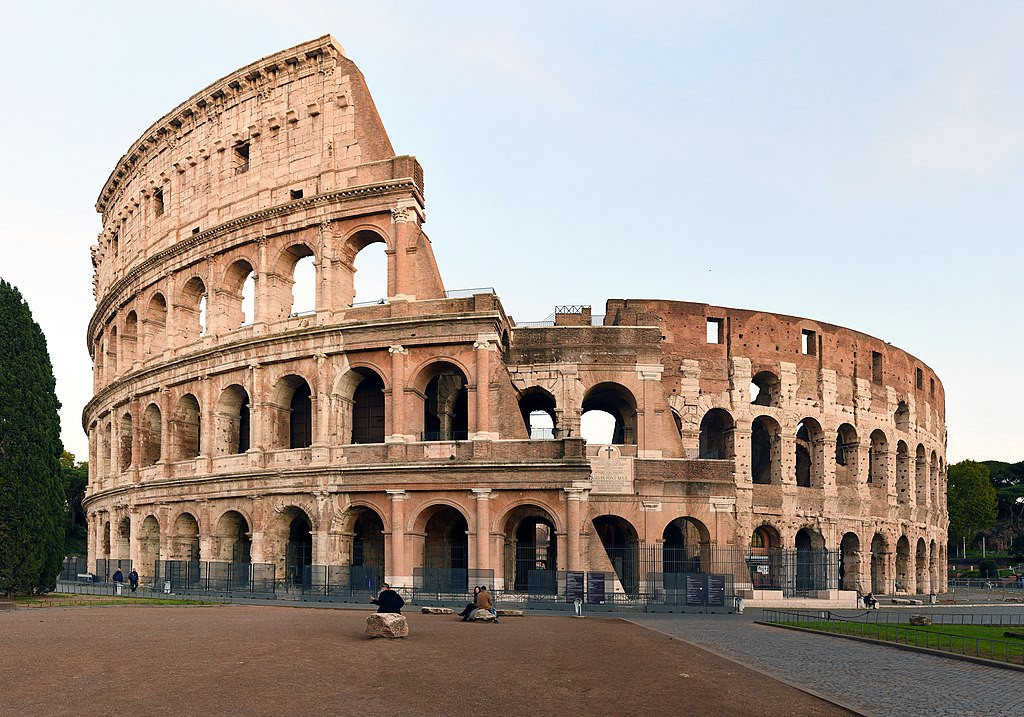
Continued development of speaking, listening comprehension, reading, and writing skills. Grammar review. Increased exposure to Italian culture through film, print, and popular music. Prerequisite: IT 201.
- Teacher: Domenica Diraviam
Category: Spring Term 2026

Examines visual and literary culture of the Italian diaspora
through selected films and novels (in English translation).
Explores how writers and directors in Italy have
produced works of art as expressions of esthetic
freedom and ethical responsibility.
through selected films and novels (in English translation).
Explores how writers and directors in Italy have
produced works of art as expressions of esthetic
freedom and ethical responsibility.
- Teacher: Domenica Diraviam
Category: Spring Term 2026
Continuation of introductory basic Japanese with emphasis on the spoken language. The Japanese writing system will also be continued. Prerequisite: JA 101.
- Teacher: Tamako Ratliff
Category: Spring Term 2026
Continuation of introductory basic Japanese with emphasis on the spoken language. The Japanese writing system will also be continued. Prerequisite: JA 101.
- Teacher: Tamako Ratliff
Category: Spring Term 2026
Continuation of Intermediate Japanese I. Prerequisite: JA 201.
- Teacher: Tamako Ratliff
Category: Spring Term 2026
Continuation of Advanced Japanese I (JA 301H). Prerequisite: JA 301H.
- Teacher: Tamako Ratliff
Category: Spring Term 2026
Continuation of JA 401 Advanced Readings in Japanese. Prerequisite: JA 401.
Category: Spring Term 2026
Stories, poems, and plays about cross-cultural interaction, drawing on examples from the Bible and classical antiquity to the present. Emphasis on interactions between Americans and Europeans and between Western and non-Western cultures.
- Teacher: Jared Stark
Category: Spring Term 2026
Courses of selected topics will be offered periodically as determined by the needs of the curriculum. Prerequisites can vary based on the topic selected. See individual course listings for each semester for the specific topic and any prerequisites. You can view special topics course descriptions by copying this URL into your internet browser - https://sites.google.com/a/eckerd.edu/registrar/course-descriptions
- Teacher: Jessica Bergamino
Category: Spring Term 2026
How literature, primarily fiction, can illuminate major issues in bioethics, such as cloning, genetic engineering, euthanasia, and cryonics. Writers to range from classic (e.g. Mary Shelley, Tolstoy) to contemporary (e.g. DeLillo, Ishiguro).
- Teacher: Jared Stark
Category: Spring Term 2026
Study of influential works in the tradition of the European novel from Don Quixote to the twentieth century, focusing on major innovations in form and subject matter.
- Teacher: Jared Stark
Category: Spring Term 2026
How did London evolve from one of the most heavily polluted cities of the 1800s to its current status as a Green City, with its commitment to green infrastructure, biodiversity, rewilding, etc.? What role do nature and environmental initiatives play in driving the cultural, economic, architectural facets of the city? Students will explore these questions and more through readings, visits to museums/cultural sites, and sites associated with London’s green infrastructure initiative, such as city farms, community gardens, urban forests, beehives atop hotels, and historic wholesale food markets that span the history of the city. Using Google Earth, students will create maps incorporating publicly available data from government portals as well as historical maps to visualize and illustrate environmental change over time. They will also use tools to create place markers and delineate areas of environmental restoration, or locations and settings from assigned readings.
- Teacher: Kelly Debure
- Teacher: Suzan Harrison
Category: Spring Term 2026
Winter Term is a four-week intensive term featuring both on -campus and study abroad opportunities. Many Winter Term courses feature experiential and hands-on learning. You can view special topics course descriptions by copying this URL into your internet browser - https://sites.google.com/a/eckerd.edu/registrar/course-descriptions
- Teacher: Nick Corrao
- Teacher: Christina Petersen
Category: Spring Term 2026
If you had the opportunity to know your fate, would you take it? The mythical Greek hero Oedipus struggled with just such information and was not able to avoid a tragic end. Despite this compelling lesson on the dangers of foreknowledge, divination was very popular in the ancient world. In fact, methods of divination can be found in almost all cultures and time periods. In this course we will learn about techniques of divination, from ancient Babylonian astrology to contemporary Tarot cards, by reading about these techniques and even experiencing some of them first hand. Students will find their own "inner eye" by star-gazing, bird-watching, lot-casting, dream-interpreting and card-reading their way through a variety of cultures and time periods, in order to understand how and why people use divination to navigate their worlds, give meaning to humanity's existence, and understand the universe.
- Teacher: Adria Haluszka
Category: Spring Term 2026
What stories that you read as a child have stayed with you? What children’s stories are an important part of our shared history and culture? Why are some stories considered “classics”? What effect do other media (for example, Disney) have on the original version of the stories, and is this effect positive?
In this course we will read and discuss a range of children’s literature— including picture books, fairy tales and middle school books, as well as scholars’ commentary about these works. We will consider criteria for excellence, and evaluate fiction and non-fiction examples and how they manage to compete with other media in providing pleasure and purpose. As one part of the course, you will be challenged to create your own original children’s picture storybook.
In this course we will read and discuss a range of children’s literature— including picture books, fairy tales and middle school books, as well as scholars’ commentary about these works. We will consider criteria for excellence, and evaluate fiction and non-fiction examples and how they manage to compete with other media in providing pleasure and purpose. As one part of the course, you will be challenged to create your own original children’s picture storybook.
- Teacher: Julie Empric
Category: Spring Term 2026
This course immerses students in the high-stakes world of international diplomacy and national security. Through real-world case studies, simulations, and direct engagement with former ambassadors, students will gain a deeper understanding of American diplomatic history, and how U.S. foreign policy is carried out overseas. Topics include the structure and function of embassies, the role of ambassadors, crisis response strategies, and the ways in which economic, cultural, and security interests shape global diplomacy. The course culminates in a full-scale simulation of an international emergency in which students must collaborate as country teams to design strategic responses to an unfolding diplomatic crisis.
- Teacher: Carolyn Johnston
Category: Spring Term 2026
Algebraic, exponential, logarithmic and trigonometric functions. Analytic geometry, curve sketching, mathematical induction, equations and inequalities.
- Teacher: Kathleen Blackett
Category: Spring Term 2026
First in three-course sequence. Techniques of differentiation and integration, limits, continuity, the Mean Value Theorem, curve sketching, Riemann sums and the Fundamental Theorem of Calculus. Applications in the sciences.
- Teacher: Sean Murphy
Category: Spring Term 2026
First in three-course sequence. Techniques of differentiation and integration, limits, continuity, the Mean Value Theorem, curve sketching, Riemann sums and the Fundamental Theorem of Calculus. Applications in the sciences.
- Teacher: Sean Murphy
Category: Spring Term 2026
First in three-course sequence. Techniques of differentiation and integration, limits, continuity, the Mean Value Theorem, curve sketching, Riemann sums and the Fundamental Theorem of Calculus. Applications in the sciences.
- Teacher: Keith Copenhaver
Category: Spring Term 2026
First in three-course sequence. Techniques of differentiation and integration, limits, continuity, the Mean Value Theorem, curve sketching, Riemann sums and the Fundamental Theorem of Calculus. Applications in the sciences.
- Teacher: Keith Copenhaver
Category: Spring Term 2026
First in three-course sequence. Techniques of differentiation and integration, limits, continuity, the Mean Value Theorem, curve sketching, Riemann sums and the Fundamental Theorem of Calculus. Applications in the sciences.
- Teacher: Sean Murphy
Category: Spring Term 2026
Continuation of MA 131M. Exponential, logarithmic and trigonometric functions, formal integration techniques, Taylor polynomials and infinite series. Prerequisite: MA 131M.
- Teacher: Bjoern Muetzel
Category: Spring Term 2026
- Teacher: Kathleen Blackett
Category: NAS
Continuation of MA 131M. Exponential, logarithmic and trigonometric functions, formal integration techniques, Taylor polynomials and infinite series. Prerequisite: MA 131M.
- Teacher: Kathleen Blackett
Category: Spring Term 2026
Continuation of MA 131M. Exponential, logarithmic and trigonometric functions, formal integration techniques, Taylor polynomials and infinite series. Prerequisite: MA 131M.
- Teacher: Kathleen Blackett
Category: Spring Term 2026
Continuation of MA 131M. Exponential, logarithmic and trigonometric functions, formal integration techniques, Taylor polynomials and infinite series. Prerequisite: MA 131M.
- Teacher: Bjoern Muetzel
Category: Spring Term 2026
Concepts, methods and applications of statistics in the natural sciences. Elementary probability theory, random variables, discrete and continuous probability distributions. Statistics and sampling distributions, estimation and hypothesis testing, linear regression. Credit is given for only one of MA 133M or one of the behavioral science statistics courses, but not both.
Section 004 of this course (CRN 7000) is designed as a Reflective Service Learning experience. Service activities will be
participating at a science festival, engaging children in geometry activities or homework
help for children at a non-profit organization.
Section 004 of this course (CRN 7000) is designed as a Reflective Service Learning experience. Service activities will be
participating at a science festival, engaging children in geometry activities or homework
help for children at a non-profit organization.
- Teacher: Nazarre Merchant
Category: Spring Term 2026
Concepts, methods and applications of statistics in the natural sciences. Elementary probability theory, random variables, discrete and continuous probability distributions. Statistics and sampling distributions, estimation and hypothesis testing, linear regression. Credit is given for only one of MA 133M or one of the behavioral science statistics courses, but not both.
Section 004 of this course (CRN 7000) is designed as a Reflective Service Learning experience. Service activities will be
participating at a science festival, engaging children in geometry activities or homework
help for children at a non-profit organization.
Section 004 of this course (CRN 7000) is designed as a Reflective Service Learning experience. Service activities will be
participating at a science festival, engaging children in geometry activities or homework
help for children at a non-profit organization.
- Teacher: Nazarre Merchant
Category: Spring Term 2026

Concepts, methods and applications of statistics in the natural sciences. Elementary probability theory, random variables, discrete and continuous probability distributions. Statistics and sampling distributions, estimation and hypothesis testing, linear regression. Credit is given for only one of MA 133M or one of the behavioral science statistics courses, but not both.
Section 004 of this course (CRN 7000) is designed as a Reflective Service Learning experience. Service activities will be
participating at a science festival, engaging children in geometry activities or homework
help for children at a non-profit organization.
Section 004 of this course (CRN 7000) is designed as a Reflective Service Learning experience. Service activities will be
participating at a science festival, engaging children in geometry activities or homework
help for children at a non-profit organization.
- Teacher: Sean Murphy
Category: Spring Term 2026
Existence and uniqueness theorems, nth-order linear differential equations, Laplace transforms, systems of ordinary differential equations, series solutions and numerical methods. Prerequisite: MA 132M.
- Teacher: Eduardo Fernandez
Category: Spring Term 2026
Vector spaces, linear transformations, matrices, eigenvalues, eigenvectors and systems of linear equations. Prerequisite: MA 131M.
- Teacher: Keith Copenhaver
Category: Spring Term 2026
Learn mathematical and computational tools to study biological systems. Topics range from the molecular to population level from areas such as biology, ecology, evolution, and epidemiology. Prerequisite: MA 131M
- Teacher: Bjoern Muetzel
Category: Spring Term 2026
An introduction to dynamical systems, chaos and fractals. Dynamic modeling, stability analysis, bifurcation theory, strange attractors, self-similarity, iterated function systems. Prerequisite: MA 234N.
- Teacher: Eduardo Fernandez
Category: Spring Term 2026
How are cognitive functions structured and computed in the brain? This course investigates how grammars are organized in neural networks and capture linguistic patterns. Topics include formal grammars, optimization, typologies, and tensor product representations of cognitive architectures.
- Teacher: Nazarre Merchant
Category: Spring Term 2026
Initial and boundary value problems. Separation of variables, d'Alembert solution, Green's functions, Fourier series, Bessel functions, Legendre polynomials, Laplace transforms and numerical methods. Prerequisite: MA 234N.
- Teacher: Bjoern Muetzel
Category: Spring Term 2026
Senior mathematics majors may, upon invitation of the mathematics faculty, do research and write a thesis under the direction of a member of that faculty.
- Teacher: Erin Griesenauer
Category: Spring Term 2026
Senior mathematics majors may, upon invitation of the mathematics faculty, do research and write a thesis under the direction of a member of that faculty.
- Teacher: Erin Griesenauer
Category: Spring Term 2026
Senior mathematics majors may, upon invitation of the mathematics faculty, do research and write a thesis under the direction of a member of that faculty.
Category: Spring Term 2026
Required of all Juniors and Seniors majoring in mathematics. One course credit upon satisfactory completion of two-years participation. Mathematical processes from a historical and cultural perspective.
- Teacher: Keith Copenhaver
Category: Spring Term 2026
Continuation of Mathematics Seminar. Four semesters required for one course credit. Prerequisite: MA1 410.
- Teacher: Keith Copenhaver
Category: Spring Term 2026
Continuation of Mathematics Seminar. Four semesters required for one course credit. Prerequisites: MA1 410 and MA2 410.
- Teacher: Keith Copenhaver
Category: Spring Term 2026
Continuation of Mathematics Seminar. Four semesters required for one course credit. Prerequisites: MA1 410, MA2 410 and MA3 410.
- Teacher: Keith Copenhaver
Category: Spring Term 2026
This course provides an introduction to the principles, concepts, and tactics of marketing. Students will explore the various marketing strategy decisions related to product development and management, pricing, placement and logistics, and promotion. A contemporary perspective of marketing is emphasized and topics related to internet marketing, relationship marketing, nonprofit marketing, ethics, and sustainability are discussed.
- Teacher: Nina Bergbrant
Category: Spring Term 2026
This course provides an introduction to the principles, concepts, and tactics of marketing. Students will explore the various marketing strategy decisions related to product development and management, pricing, placement and logistics, and promotion. A contemporary perspective of marketing is emphasized and topics related to internet marketing, relationship marketing, nonprofit marketing, ethics, and sustainability are discussed.
- Teacher: Nina Bergbrant
Category: Spring Term 2026
This course provides an introduction to the principles, concepts, and tactics of marketing. Students will explore the various marketing strategy decisions related to product development and management, pricing, placement and logistics, and promotion. A contemporary perspective of marketing is emphasized and topics related to internet marketing, relationship marketing, nonprofit marketing, ethics, and sustainability are discussed.
- Teacher: Nina Bergbrant
Category: Spring Term 2026
Students will use computer simulation to learn digital marketing strategies such as online advertising, search engine optimization, web analytics, etc. Students will develop a social media campaign for an organization of their choice.
- Teacher: Gemma Fountain
Category: Spring Term 2026
Contributions of the behavioral disciplines (psychology, sociology, anthropology) to understanding the consumer decision-making process. The impact and value issues of the consumer movement. Prerequisite: MK 300S
- Teacher: Virginie Khare
Category: Spring Term 2026
Processes and functions of promotion, strategies incorporating creative use of advertising, publicity, merchandising, direct selling, and sales promotion. Prerequisite: MK 300S.
- Teacher: Sandy Graca
Category: Spring Term 2026
Collection and measurement of data on market identification, sales forecasting and marketing strategy development, market research, cost/revenue breakdowns, competitive analysis, others. Prerequisites: MK 300S and statistics.
- Teacher: Gemma Fountain
Category: Spring Term 2026
Ind. Study: Sales & Marketing
Category: Spring Term 2026
Students majoring in Marketing will complete the Marketing Internship as an Independent Study course sponsored, supervised and approved by a MK/IB faculty. Periodic meetings with the sponsoring professor is required. Prerequisite: MK 300S and Junior or Senior standing.
- Teacher: Virginie Khare
Category: Spring Term 2026
Students majoring in Marketing will complete the Marketing Internship as an Independent Study course sponsored, supervised and approved by a MK/IB faculty. Periodic meetings with the sponsoring professor is required. Prerequisite: MK 300S and Junior or Senior standing.
Category: Spring Term 2026
Students majoring in Marketing will complete the Marketing Internship as an Independent Study course sponsored, supervised and approved by a MK/IB faculty. Periodic meetings with the sponsoring professor is required. Prerequisite: MK 300S and Junior or Senior standing.
Category: Spring Term 2026
Students majoring in Marketing will complete the Marketing Internship as an Independent Study course sponsored, supervised and approved by a MK/IB faculty. Periodic meetings with the sponsoring professor is required. Prerequisite: MK 300S and Junior or Senior standing.
Category: Spring Term 2026
This course is the Major comps and focuses on decision-making and marketing logic in the analysis of marketing problems. The course includes the development of a formal marketing plan addressing contemporary marketing topics, such as sustainability marketing, digital marketing, and relationship marketing. Prerequisite: MK 300S and Senior standing.
- Teacher: Sandy Graca
Category: Spring Term 2026
Introduction to interdisciplinary nature of management and leadership. Survey of historical development of management as a discipline, functional areas of management, comparison of management and leadership, contemporary issues in management and leadership.
- Teacher: Laura Singleton
Category: Spring Term 2026
Introduction to quantitative analysis in economics and management. Lectures and discussions of selected problems. Data analysis projects. Prerequisite: EC 281S, EC 282S, ES 172, HD 101S MN 110S, or EN 204S. Sophomore status required.
- Teacher: Thomas Ashman
Category: Spring Term 2026
Accounting principles used in the preparation and analysis of financial statements, accumulation of business operating data and its classification for financial reporting. Balance sheets and income statements.
- Teacher: Tom Murphy
Category: Spring Term 2026
Decisions that must be made by managers pertaining to computers and information systems. Computer terminology, hardware and programming, selecting computer and data base systems, etc.
- Teacher: Thomas Lombardi
Category: Spring Term 2026
Principles, rational and application of business law and regulations. Contracts, Uniform Commercial Code, creditors' rights, labor, torts and property, judicial and administrative processes.
- Teacher: James Mallue
Category: Spring Term 2026
Concepts and applications in service and manufacturing sectors of global economy. Forecasting, product and process planning, facility location and layout, project management and operations scheduling, inventory planning and control, quality control. Prerequisite: Junior standing.
- Teacher: Daniel Rashba
Category: Spring Term 2026
Major factors affecting behavior in organizations. Motivation, group and team dynamics, macroorganizational factors, leadership. Prerequisites: MN 110S and MN 260M. Junior standing required.
- Teacher: Laura Singleton
Category: Spring Term 2026
The information utilized by operating management in decision making: determination of product cost and profitability, budgeting, profit planning, utilization of standard cost and financial statement analysis. Prerequisite: MN 271S.
- Teacher: Tom Murphy
Category: Spring Term 2026
Theory and practices of personnel and human resources management in organizations, including job definition, staffing, training and development, compensation and benefits, labor relations, environmental analysis and human resource planning and controlling. Prerequisite: JR or SR standing.
- Teacher: Matthew Karlesky
Category: Spring Term 2026
An introduction to the basic principles, concepts, and methods used in the financial management of firms. Prerequisites: MN 271S and one of EC 281S, EC 282S.
- Teacher: Thomas Ashman
Category: Spring Term 2026
Application on the principal management functions to non-profit organizations, and relations among volunteer boards of directors and professional non-profit organization managers and interactions between fundraisers, program managers, and granting agency officials, and ethical issues.
- Teacher: Laura Singleton
Category: Spring Term 2026
An advanced finance course dealing with foundations of financial management used in organization decision making. Prerequisites: MN 377 or IB 378.
- Teacher: Thomas Ashman
Category: Spring Term 2026
Comprehensive examination requirement for management and business administration majors. Practicum in general management. Prerequisite: Senior standing and successful completion of the writing portfolio.
- Teacher: Jennifer Knippen
Category: Spring Term 2026
Geologic history and processes, including the physical, chemical and biological processes, that influence the geological development of the world's oceans. Includes marine geological and geophysical exploration techniques and human impacts. Includes laboratory component.
- Teacher: Gregg Brooks
Category: Spring Term 2026
Geologic history and processes, including the physical, chemical and biological processes, that influence the geological development of the world's oceans. Includes marine geological and geophysical exploration techniques and human impacts. Includes laboratory component.
- Teacher: Gregg Brooks
Category: Spring Term 2026
Geologic history and processes, including the physical, chemical and biological processes, that influence the geological development of the world's oceans. Includes marine geological and geophysical exploration techniques and human impacts. Includes laboratory component.
- Teacher: Rebekka Larson
Category: Spring Term 2026
Geologic history and processes, including the physical, chemical and biological processes, that influence the geological development of the world's oceans. Includes marine geological and geophysical exploration techniques and human impacts. Includes laboratory component.
- Teacher: Rebekka Larson
Category: Spring Term 2026
The physical, chemical and geological processes that influence biological productivity as well as the distribution, abundance and adaptations of marine life in various environments of the world's oceans. Includes laboratory component.
- Teacher: Shannon Gowans
Category: Spring Term 2026
The physical, chemical and geological processes that influence biological productivity as well as the distribution, abundance and adaptations of marine life in various environments of the world's oceans. Includes laboratory component.
- Teacher: Emily Lancaster
Category: Spring Term 2026
The physical, chemical and geological processes that influence biological productivity as well as the distribution, abundance and adaptations of marine life in various environments of the world's oceans. Includes laboratory component.
- Teacher: Jorge Angulo-Valdes
Category: Spring Term 2026
Diversity of marine and freshwater plants, their relationship to each other and to their environment. A survey of all plant groups is included. Field trips. Prerequisite: MS 102N, BI 211, or BI 112N, and Sophomore standing.
- Teacher: Shanice Piango-Brown
Category: Spring Term 2026
Diversity of marine and freshwater plants, their relationship to each other and to their environment. A survey of all plant groups is included. Field trips. Prerequisite: MS 102N, BI 211, or BI 112N, and Sophomore standing.
- Teacher: Shanice Piango-Brown
Category: Spring Term 2026
Diversity of marine and freshwater plants, their relationship to each other and to their environment. A survey of all plant groups is included. Field trips. Prerequisite: MS 102N, BI 211, or BI 112N, and Sophomore standing.
- Teacher: Shanice Piango-Brown
Category: Spring Term 2026
Diversity of marine and freshwater plants, their relationship to each other and to their environment. A survey of all plant groups is included. Field trips. Prerequisite: MS 102N, BI 211, or BI 112N, and Sophomore standing.
- Teacher: Shanice Piango-Brown
Category: Spring Term 2026
Diversity of marine and freshwater plants, their relationship to each other and to their environment. A survey of all plant groups is included. Field trips. Prerequisite: MS 102N, BI 211, or BI 112N, and Sophomore standing.
- Teacher: Jeannine Lessmann
Category: Spring Term 2026
Structural basis, evolutionary relationships, biological functions and environmental interactions of animal life in the seas, exploring the local area. Includes laboratory component. Prerequisites: MS 101N, MS 102N, and Sophomore standing.
- Teacher: Emily Lancaster
Category: Spring Term 2026
Predator Avoidance of Snails
Category: Spring Term 2026
Morphology, classification, phylogeny, paleoecology of groups of marine invertebrate fossil organisms. Taphomony, biostratigraphy, and the stages in the evolution of marine ecosystems. Field trips and labs. Prerequisite: MS 101N.
- Teacher: Chelsea Korpanty
Category: Spring Term 2026
Systematics, evolution, ecology, behavior, and anatomical and physiological adaptations of sharks and rays. Current scientific research, human impact, how populations can be managed. Prerequisites: BI 212 or BI 303 and Junior standing.
- Teacher: William Szelistowski
Category: Spring Term 2026
This course is being offered at the London Study Center and is only open to students who have been approved for study there in the Spring 2026 semester.
- Teacher: Cory Krediet
Category: Spring Term 2026
Integrated study of chemical and physical ocean processes with emphasis on interactions with the biosphere, atmosphere, and lithosphere. Topics include biogeochemical cycling, primary production, and chemical tracers to study oceanic processes. Includes laboratory component. Prerequisites: MS 101N, MS 102N, and CH 122.
- Teacher: Patrick Schwing
Category: Spring Term 2026
Integrated study of chemical and physical ocean processes with emphasis on interactions with the biosphere, atmosphere, and lithosphere. Topics include biogeochemical cycling, primary production, and chemical tracers to study oceanic processes. Includes laboratory component. Prerequisites: MS 101N, MS 102N, and CH 122.
- Teacher: Patrick Schwing
Category: Spring Term 2026
Integrated study of chemical and physical ocean processes with emphasis on interactions with the biosphere, atmosphere, and lithosphere. Topics include biogeochemical cycling, primary production, and chemical tracers to study oceanic processes. Includes laboratory component. Prerequisites: MS 101N, MS 102N, and CH 122.
- Teacher: Patrick Schwing
Category: Spring Term 2026
Integrated study of chemical and physical ocean processes with emphasis on interactions with the biosphere, atmosphere, and lithosphere. Topics include biogeochemical cycling, primary production, and chemical tracers to study oceanic processes. Includes laboratory component. Prerequisites: MS 101N, MS 102N, and CH 122.
- Teacher: Patrick Schwing
Category: Spring Term 2026
e-DNA analysis/bioinformatics
Category: Spring Term 2026
Mussels as Sentinels
Category: Spring Term 2026
Intrnsp FWC Marine Path Lab
Category: Spring Term 2026
Microplastics Research
Category: Spring Term 2026
Osmoregulation in Stone Crabs
Category: Spring Term 2026
Research Manuscript Prep
Category: Spring Term 2026
Sediment and Contamination
Category: Spring Term 2026
Intnshp Marine Mammal Path Lab
Category: Spring Term 2026
Required of Marine Science majors in the senior year with the exception of those who complete a senior thesis, and taken during either Winter Term or Spring Semester. Written examinations covering general marine science, track-specific courses, and interdisciplinary applications of marine science principles.
- Teacher: Chelsea Korpanty
- Teacher: Amy Siuda
- Teacher: Laura Wetzel
Category: Spring Term 2026
Required of Marine Science majors in the senior year with the exception of those who complete a senior thesis, and taken during either Winter Term or Spring Semester. Written examinations covering general marine science, track-specific courses, and interdisciplinary applications of marine science principles.
- Teacher: Chelsea Korpanty
Category: Spring Term 2026
Directed research project only by invitation of the marine science faculty. Students may substitute a senior thesis for the comprehensive exams. The senior thesis committee must include at least one tenure-track faculty member from the Marine Science discipline.
- Teacher: Emily Lancaster
Category: Spring Term 2026
Directed research project only by invitation of the marine science faculty. Students may substitute a senior thesis for the comprehensive exams. The senior thesis committee must include at least one tenure-track faculty member from the Marine Science discipline.
- Teacher: Emily Lancaster
Category: Spring Term 2026
Directed research project only by invitation of the marine science faculty. Students may substitute a senior thesis for the comprehensive exams. The senior thesis committee must include at least one tenure-track faculty member from the Marine Science discipline.
- Teacher: Patrick Schwing
Category: Spring Term 2026
Directed research project only by invitation of the marine science faculty. Students may substitute a senior thesis for the comprehensive exams. The senior thesis committee must include at least one tenure-track faculty member from the Marine Science discipline.
Category: Spring Term 2026
Directed research project only by invitation of the marine science faculty. Students may substitute a senior thesis for the comprehensive exams. The senior thesis committee must include at least one tenure-track faculty member from the Marine Science discipline.
- Teacher: Chelsea Korpanty
Category: Spring Term 2026
Directed research project only by invitation of the marine science faculty. Students may substitute a senior thesis for the comprehensive exams. The senior thesis committee must include at least one tenure-track faculty member from the Marine Science discipline.
Category: Spring Term 2026
Directed research project only by invitation of the marine science faculty. Students may substitute a senior thesis for the comprehensive exams. The senior thesis committee must include at least one tenure-track faculty member from the Marine Science discipline.
Category: Spring Term 2026
Directed research project only by invitation of the marine science faculty. Students may substitute a senior thesis for the comprehensive exams. The senior thesis committee must include at least one tenure-track faculty member from the Marine Science discipline.
Category: Spring Term 2026
Directed research project only by invitation of the marine science faculty. Students may substitute a senior thesis for the comprehensive exams. The senior thesis committee must include at least one tenure-track faculty member from the Marine Science discipline.
Category: Spring Term 2026
Directed research project only by invitation of the marine science faculty. Students may substitute a senior thesis for the comprehensive exams. The senior thesis committee must include at least one tenure-track faculty member from the Marine Science discipline.
Category: Spring Term 2026
Directed research project only by invitation of the marine science faculty. Students may substitute a senior thesis for the comprehensive exams. The senior thesis committee must include at least one tenure-track faculty member from the Marine Science discipline.
Category: Spring Term 2026
Directed research project only by invitation of the marine science faculty. Students may substitute a senior thesis for the comprehensive exams. The senior thesis committee must include at least one tenure-track faculty member from the Marine Science discipline.
Category: Spring Term 2026
Directed research project only by invitation of the marine science faculty. Students may substitute a senior thesis for the comprehensive exams. The senior thesis committee must include at least one tenure-track faculty member from the Marine Science discipline.
Category: Spring Term 2026
Directed research project only by invitation of the marine science faculty. Students may substitute a senior thesis for the comprehensive exams. The senior thesis committee must include at least one tenure-track faculty member from the Marine Science discipline.
- Teacher: Emily Lancaster
Category: Spring Term 2026
Directed research project only by invitation of the marine science faculty. Students may substitute a senior thesis for the comprehensive exams. The senior thesis committee must include at least one tenure-track faculty member from the Marine Science discipline.
- Teacher: Chelsea Korpanty
Category: Spring Term 2026
Directed research project only by invitation of the marine science faculty. Students may substitute a senior thesis for the comprehensive exams. The senior thesis committee must include at least one tenure-track faculty member from the Marine Science discipline.
- Teacher: Patrick Schwing
Category: Spring Term 2026
Directed research project only by invitation of the marine science faculty. Students may substitute a senior thesis for the comprehensive exams. The senior thesis committee must include at least one tenure-track faculty member from the Marine Science discipline.
- Teacher: Rebekka Larson
Category: Spring Term 2026
Continuation of Marine Science Freshman Research. Two semesters equal one course credit. Evaluation is on a credit/no credit basis. The grade of Credit is comparable to work evaluated as C or better. Prerequisite: MS1 199.
- Teacher: Shannon Gowans
Category: Spring Term 2026
Students take one semester of marine science seminar during the junior year and one semester of seminar during the senior year. Both MS1 410 Marine Science Junior Seminar and MS2 410 Marine Science Senior Seminar are required for one course credit. Seniors only. Prerequisite: MS1 410.
- Teacher: Jeannine Lessmann
Category: Spring Term 2026
Students take one semester of marine science seminar during the junior year and one semester of seminar during the senior year. Both MS1 410 Marine Science Junior Seminar and MS2 410 Marine Science Senior Seminar are required for one course credit. Seniors only. Prerequisite: MS1 410.
- Teacher: Brian Zielinski
Category: Spring Term 2026
Students take one semester of marine science seminar during the junior year and one semester of seminar during the senior year. Both MS1 410 Marine Science Junior Seminar and MS2 410 Marine Science Senior Seminar are required for one course credit. Seniors only. Prerequisite: MS1 410.
- Teacher: Chelsea Korpanty
Category: Spring Term 2026
Students take one semester of marine science seminar during the junior year and one semester of seminar during the senior year. Both MS1 410 Marine Science Junior Seminar and MS2 410 Marine Science Senior Seminar are required for one course credit. Seniors only. Prerequisite: MS1 410.
- Teacher: Jorge Angulo-Valdes
Category: Spring Term 2026
- Teacher: Leslie La Barre
- Teacher: Ryan Lambe
- Teacher: Sasha Tuck
Category: Arts & Music
In-depth study of major formal and harmonic structures in Western art music from the 17th to 20th centuries. Includes analysis both of musical scores and sound recordings. Prerequisite: MU 111A or equivalent as demonstrated through placement exam or transcripts. Formerly MU 146 Tonal Theory Ib.
- Teacher: Leslie La Barre
Category: Spring Term 2026
Explores listening, acoustics, theory, and socio-historical foundations of music to equip students to undertake further culturally informed study in music. No prior music education is required for this class, though students should have some experience singing or playing an instrument.
- Teacher: Ryan Lambe
Category: Spring Term 2026
This course traces the history and development of film music by examining creative, technological, and cultural shifts. Students will study the scoring process, highlight key composers, and analyze compositional styles and film scores through viewings and discussions.
- Teacher: Leslie La Barre
Category: Spring Term 2026
Seminar focusing on music and scholarship incorporating feminist, queer, and transgender theories. Examines intersections of gender and sexuality with race, class, and ability. Draws examples from western and non-western traditional, art, and popular musics.
- Teacher: Ryan Lambe
Category: Spring Term 2026
The comprehensive experience is designed for students to integrate material from courses in the major through exams, a writing sample, a field-specific project/essay, and a professional development portfolio. Prerequisites: one music theory course and one writing intensive course with a C- or better, Senior or Junior standing.
- Teacher: Leslie La Barre
Category: Spring Term 2026
Weekly one-hour lessons involving an extra fee. Two semesters required for one course credit. If you have already completed MU1 242A, register for MU2 242A below. In addition, you must submit the form: https://docs.google.com/forms/d/e/1FAIpQLSfWvAmzmqRTQnxazxKP633GW7KSBVtgBJHt2IghfN465jGhhg/viewform
Category: Spring Term 2026
Weekly one-hour lessons involving an extra fee. Two semesters required for one course credit. If you have already completed MU1 242A, register for MU2 242A below. In addition, you must submit the form: https://docs.google.com/forms/d/e/1FAIpQLSfWvAmzmqRTQnxazxKP633GW7KSBVtgBJHt2IghfN465jGhhg/viewform
- Teacher: Dawne Eubanks
Category: Spring Term 2026
Weekly one-hour lessons involving an extra fee. Two semesters required for one course credit. If you have already completed MU1 242A, register for MU2 242A below. In addition, you must submit the form: https://docs.google.com/forms/d/e/1FAIpQLSfWvAmzmqRTQnxazxKP633GW7KSBVtgBJHt2IghfN465jGhhg/viewform
- Teacher: Sasha Tuck
Category: Spring Term 2026
Weekly one-hour lessons involving an extra fee. Two semesters required for one course credit. If you have already completed MU1 242A, register for MU2 242A below. In addition, you must submit the form: https://docs.google.com/forms/d/e/1FAIpQLSfWvAmzmqRTQnxazxKP633GW7KSBVtgBJHt2IghfN465jGhhg/viewform
- Teacher: Sebastian Johnson
Category: Spring Term 2026
Weekly one-hour lessons involving an extra fee. Two semesters required for one course credit. If you have already completed MU1 242A, register for MU2 242A below. In addition, you must submit the form: https://docs.google.com/forms/d/e/1FAIpQLSfWvAmzmqRTQnxazxKP633GW7KSBVtgBJHt2IghfN465jGhhg/viewform
Category: Spring Term 2026
Weekly one-hour lessons involving an extra fee. Two semesters required for one course credit. If you have already completed MU1 242A, register for MU2 242A below. In addition, you must submit the form: https://docs.google.com/forms/d/e/1FAIpQLSfWvAmzmqRTQnxazxKP633GW7KSBVtgBJHt2IghfN465jGhhg/viewform
- Teacher: Alfred Gratta
Category: Spring Term 2026
Weekly one-hour lessons involving an extra fee. Two semesters required for one course credit. If you have already completed MU1 242A, register for MU2 242A below. In addition, you must submit the form: https://docs.google.com/forms/d/e/1FAIpQLSfWvAmzmqRTQnxazxKP633GW7KSBVtgBJHt2IghfN465jGhhg/viewform
Category: Spring Term 2026
Weekly one-hour lessons involving an extra fee. Two semesters required for one course credit. If you have already completed MU1 242A, register for MU2 242A below. In addition, you must submit the form: https://docs.google.com/forms/d/e/1FAIpQLSfWvAmzmqRTQnxazxKP633GW7KSBVtgBJHt2IghfN465jGhhg/viewform
Category: Spring Term 2026
Weekly one-hour lessons involving an extra fee. Two semesters required for one course credit. If you have already completed MU1 242A, register for MU2 242A below. In addition, you must submit the form: https://docs.google.com/forms/d/e/1FAIpQLSfWvAmzmqRTQnxazxKP633GW7KSBVtgBJHt2IghfN465jGhhg/viewform
Category: Spring Term 2026
Weekly one-hour lessons involving an extra fee. Two semesters required for one course credit. If you have already completed MU1 242A, register for MU2 242A below. In addition, you must submit the form: https://docs.google.com/forms/d/e/1FAIpQLSfWvAmzmqRTQnxazxKP633GW7KSBVtgBJHt2IghfN465jGhhg/viewform
- Teacher: Kurt Grissom
Category: Spring Term 2026
Weekly one-hour lessons involving an extra fee. Two semesters required for one course credit. If you have already completed MU1 242A, register for MU2 242A below. In addition, you must submit the form: https://docs.google.com/forms/d/e/1FAIpQLSfWvAmzmqRTQnxazxKP633GW7KSBVtgBJHt2IghfN465jGhhg/viewform
- Teacher: Antonio Negron
Category: Spring Term 2026
Weekly one-hour lessons involving an extra fee. Two semesters required for one course credit. If you have already completed MU1 242A, register for MU2 242A below. In addition, you must submit the form: https://docs.google.com/forms/d/e/1FAIpQLSfWvAmzmqRTQnxazxKP633GW7KSBVtgBJHt2IghfN465jGhhg/viewform
Category: Spring Term 2026
Weekly one-hour lessons involving an extra fee. Two semesters required for one course credit. If you have already completed MU1 242A, register for MU2 242A below. In addition, you must submit the form: https://docs.google.com/forms/d/e/1FAIpQLSfWvAmzmqRTQnxazxKP633GW7KSBVtgBJHt2IghfN465jGhhg/viewform
Category: Spring Term 2026
Weekly one-hour lessons involving an extra fee. Two semesters required for one course credit. If you have already completed MU1 242A, register for MU2 242A below. In addition, you must submit the form: https://docs.google.com/forms/d/e/1FAIpQLSfWvAmzmqRTQnxazxKP633GW7KSBVtgBJHt2IghfN465jGhhg/viewform
Category: Spring Term 2026
Weekly one-hour lessons involving an extra fee. Two semesters required for one course credit. If you have already completed MU1 242A, register for MU2 242A below. In addition, you must submit the form: https://docs.google.com/forms/d/e/1FAIpQLSfWvAmzmqRTQnxazxKP633GW7KSBVtgBJHt2IghfN465jGhhg/viewform
- Teacher: Rebecca Douglass
Category: Spring Term 2026
Weekly one-hour lessons involving an extra fee. Two semesters required for one course credit. If you have already completed MU1 242A, register for MU2 242A below. In addition, you must submit the form: https://docs.google.com/forms/d/e/1FAIpQLSfWvAmzmqRTQnxazxKP633GW7KSBVtgBJHt2IghfN465jGhhg/viewform
- Teacher: Agnieszka Zick
Category: Spring Term 2026
Weekly one-hour lessons involving an extra fee. Two semesters required for one course credit. If you have already completed MU1 242A, register for MU2 242A below. In addition, you must submit the form: https://docs.google.com/forms/d/e/1FAIpQLSfWvAmzmqRTQnxazxKP633GW7KSBVtgBJHt2IghfN465jGhhg/viewform
Category: Spring Term 2026
This course is for the study, rehearsal, and public performance of vocal literature, with an emphasis on the development of skills needed to perform within an ensemble.
- Teacher: Ryan Lambe
Category: Spring Term 2026
This course is for the study, rehearsal, and public performance of instrumental literature, with an emphasis on the development of skills needed to perform within an ensemble. Fulfills approximately 10 hours of the Reflective Service Learning Academic Requirement per semester.
- Teacher: Sasha Tuck
Category: Spring Term 2026
Weekly one-hour lessons involving an extra fee. Two semesters required for one course credit. If you have already completed MU1 242A, register for MU2 242A below. In addition, you must submit the form: https://docs.google.com/forms/d/e/1FAIpQLSfWvAmzmqRTQnxazxKP633GW7KSBVtgBJHt2IghfN465jGhhg/viewform
Category: Spring Term 2026
Weekly one-hour lessons involving an extra fee. Two semesters required for one course credit. If you have already completed MU1 242A, register for MU2 242A below. In addition, you must submit the form: https://docs.google.com/forms/d/e/1FAIpQLSfWvAmzmqRTQnxazxKP633GW7KSBVtgBJHt2IghfN465jGhhg/viewform
- Teacher: Dawne Eubanks
Category: Spring Term 2026
Weekly one-hour lessons involving an extra fee. Two semesters required for one course credit. If you have already completed MU1 242A, register for MU2 242A below. In addition, you must submit the form: https://docs.google.com/forms/d/e/1FAIpQLSfWvAmzmqRTQnxazxKP633GW7KSBVtgBJHt2IghfN465jGhhg/viewform
- Teacher: Sasha Tuck
Category: Spring Term 2026
Weekly one-hour lessons involving an extra fee. Two semesters required for one course credit. If you have already completed MU1 242A, register for MU2 242A below. In addition, you must submit the form: https://docs.google.com/forms/d/e/1FAIpQLSfWvAmzmqRTQnxazxKP633GW7KSBVtgBJHt2IghfN465jGhhg/viewform
- Teacher: Sebastian Johnson
Category: Spring Term 2026
Weekly one-hour lessons involving an extra fee. Two semesters required for one course credit. If you have already completed MU1 242A, register for MU2 242A below. In addition, you must submit the form: https://docs.google.com/forms/d/e/1FAIpQLSfWvAmzmqRTQnxazxKP633GW7KSBVtgBJHt2IghfN465jGhhg/viewform
- Teacher: Agnieszka Zick
Category: Spring Term 2026
Weekly one-hour lessons involving an extra fee. Two semesters required for one course credit. If you have already completed MU1 242A, register for MU2 242A below. In addition, you must submit the form: https://docs.google.com/forms/d/e/1FAIpQLSfWvAmzmqRTQnxazxKP633GW7KSBVtgBJHt2IghfN465jGhhg/viewform
Category: Spring Term 2026
Weekly one-hour lessons involving an extra fee. Two semesters required for one course credit. If you have already completed MU1 242A, register for MU2 242A below. In addition, you must submit the form: https://docs.google.com/forms/d/e/1FAIpQLSfWvAmzmqRTQnxazxKP633GW7KSBVtgBJHt2IghfN465jGhhg/viewform
Category: Spring Term 2026
Weekly one-hour lessons involving an extra fee. Two semesters required for one course credit. If you have already completed MU1 242A, register for MU2 242A below. In addition, you must submit the form: https://docs.google.com/forms/d/e/1FAIpQLSfWvAmzmqRTQnxazxKP633GW7KSBVtgBJHt2IghfN465jGhhg/viewform
Category: Spring Term 2026
Weekly one-hour lessons involving an extra fee. Two semesters required for one course credit. If you have already completed MU1 242A, register for MU2 242A below. In addition, you must submit the form: https://docs.google.com/forms/d/e/1FAIpQLSfWvAmzmqRTQnxazxKP633GW7KSBVtgBJHt2IghfN465jGhhg/viewform
Category: Spring Term 2026
Weekly one-hour lessons involving an extra fee. Two semesters required for one course credit. If you have already completed MU1 242A, register for MU2 242A below. In addition, you must submit the form: https://docs.google.com/forms/d/e/1FAIpQLSfWvAmzmqRTQnxazxKP633GW7KSBVtgBJHt2IghfN465jGhhg/viewform
Category: Spring Term 2026
Weekly one-hour lessons involving an extra fee. Two semesters required for one course credit. If you have already completed MU1 242A, register for MU2 242A below. In addition, you must submit the form: https://docs.google.com/forms/d/e/1FAIpQLSfWvAmzmqRTQnxazxKP633GW7KSBVtgBJHt2IghfN465jGhhg/viewform
- Teacher: Kurt Grissom
Category: Spring Term 2026
Weekly one-hour lessons involving an extra fee. Two semesters required for one course credit. If you have already completed MU1 242A, register for MU2 242A below. In addition, you must submit the form: https://docs.google.com/forms/d/e/1FAIpQLSfWvAmzmqRTQnxazxKP633GW7KSBVtgBJHt2IghfN465jGhhg/viewform
- Teacher: Antonio Negron
Category: Spring Term 2026
Weekly one-hour lessons involving an extra fee. Two semesters required for one course credit. If you have already completed MU1 242A, register for MU2 242A below. In addition, you must submit the form: https://docs.google.com/forms/d/e/1FAIpQLSfWvAmzmqRTQnxazxKP633GW7KSBVtgBJHt2IghfN465jGhhg/viewform
Category: Spring Term 2026
Weekly one-hour lessons involving an extra fee. Two semesters required for one course credit. If you have already completed MU1 242A, register for MU2 242A below. In addition, you must submit the form: https://docs.google.com/forms/d/e/1FAIpQLSfWvAmzmqRTQnxazxKP633GW7KSBVtgBJHt2IghfN465jGhhg/viewform
Category: Spring Term 2026
Weekly one-hour lessons involving an extra fee. Two semesters required for one course credit. If you have already completed MU1 242A, register for MU2 242A below. In addition, you must submit the form: https://docs.google.com/forms/d/e/1FAIpQLSfWvAmzmqRTQnxazxKP633GW7KSBVtgBJHt2IghfN465jGhhg/viewform
Category: Spring Term 2026
Weekly one-hour lessons involving an extra fee. Two semesters required for one course credit. If you have already completed MU1 242A, register for MU2 242A below. In addition, you must submit the form: https://docs.google.com/forms/d/e/1FAIpQLSfWvAmzmqRTQnxazxKP633GW7KSBVtgBJHt2IghfN465jGhhg/viewform
Category: Spring Term 2026
Weekly one-hour lessons involving an extra fee. Two semesters required for one course credit. If you have already completed MU1 242A, register for MU2 242A below. In addition, you must submit the form: https://docs.google.com/forms/d/e/1FAIpQLSfWvAmzmqRTQnxazxKP633GW7KSBVtgBJHt2IghfN465jGhhg/viewform
- Teacher: Rebecca Douglass
Category: Spring Term 2026
This course is for the study, rehearsal, and public performance of vocal literature, with an emphasis on the development of skills needed to perform within an ensemble.
- Teacher: Ryan Lambe
Category: Spring Term 2026
This course is for the study, rehearsal, and public performance of instrumental literature, with an emphasis on the development of skills needed to perform within an ensemble.
- Teacher: Sasha Tuck
Category: Spring Term 2026
This E-perspective course involves class one night per week during spring semester and a 2-week trip to Cuba in July. On campus, the course will introduce Cuban geography, history, culture, sea turtle ecology and reproduction, coral reef characterization, and fish diversity. Activities will also include class discussion of readings. In Cuba, we will camp on a sea turtle nesting beach for one week to evaluate the nesting sea turtle populations. The second week will involve SCUBA dives or snorkeling to learn underwater sampling methods. It is recommended that students get SCUBA certified before the trip. However, students who are not SCUBA-certified will be able to use mask and snorkel to take on similar activities. Evaluation includes quizzes, assignments, a trip journal, presentations, and class participation. There are no prerequisites and the course is suitable for any student, although the course may be most valuable for those majoring in marine science, environmental studies, animal studies, or biology.
- Teacher: Jorge Angulo-Valdes
Category: Spring Term 2026
Cuba’s marine environment is considered to be among the most pristine in the entire Caribbean. In light of the rapid changes currently underway in the Cuban economy and political situation, scientists are working to better understand Cuba’s unique marine ecology, with the aim of providing scientific information to best manage and protect the country’s marine resources.
Course topics include marine protected areas, tarpon biology, sea turtle conservation, coral reef restoration, reef fish communities, and lionfish impacts. Following on-campus preparation and study, we will be hosted by the Guanahacabibes National Park in the SW corner of the country, where we will study current research and conservation efforts in the area. Later we will head to Bay of Pigs on the southern coast of Cuba, where we will see the status of the coastal environment and its use in ecotourism and aquaculture. In addition, students will explore Cuban culture, including home stays at both field sites, and visits to areas of historical importance in and outside of Havana. Four university of Havana students will join our group and will present their research results.
Course topics include marine protected areas, tarpon biology, sea turtle conservation, coral reef restoration, reef fish communities, and lionfish impacts. Following on-campus preparation and study, we will be hosted by the Guanahacabibes National Park in the SW corner of the country, where we will study current research and conservation efforts in the area. Later we will head to Bay of Pigs on the southern coast of Cuba, where we will see the status of the coastal environment and its use in ecotourism and aquaculture. In addition, students will explore Cuban culture, including home stays at both field sites, and visits to areas of historical importance in and outside of Havana. Four university of Havana students will join our group and will present their research results.
- Teacher: Jorge Angulo-Valdes
- Teacher: Peter Scott
Category: Spring Term 2026
Experiencing and observing the wilderness of Africa: Botswana and Zimbabwe. Living in the wilderness of the Central Kalahari, Okavango Delta, and Chobe National Park. A unique opportunity to explore one of the most naturally diverse regions in the world. Students will have an opportunity to learn about ecology, geology, biology, and history/culture of Botswana/Zimbabwe. Objective is to fully immerse students in the environment toward achieving a better appreciation, understanding, and value of these environments including but not limited to scientific, cultural, and current challenges. Mobile tent camping (classic safari with professional local guides and staff) in the Central Kalahari Game Reserve, Moremi Game Reserve, and Chobe National Park as well as permanent tent camp in the Kwai Community Concession. Pristine wilderness, with various terrain includes savannah, winding waterways, and dense forest that supports an incredibly wide spectrum of wildlife.
- Teacher: Gregg Brooks
- Teacher: Rebekka Larson
Category: Spring Term 2026
This course will be framed around four primary spheres represented in Antarctica (biosphere, cryosphere, geosphere and hydrosphere) including their functions and interactions. Students will build foundational knowledge in oceanography, glaciology, geology, and coastal environments, foster deeper understanding of human-environment interactions, gain knowledge on Antarctic biodiversity, and gain cultural competency of territorial identities. These goals will be accomplished through lectures, discussion, experiential learning, and reflective and analytical writing assignments and presentations. We will travel to Ushuaia, Argentina, embark on a motor vessel, navigate through the Strait of Magellan, and cross the Drake Passage. Once we arrive, we will observe icebergs, glaciers, cetaceans, penguins, seabirds and more onboard the ship, via zodiac excursion and during landfalls on the Antarctic Peninsula and surrounding islands. We will also make stops at bases operated by Antarctic Treaty nations. This will be an active program including hiking, walking, and possibly paddling.
- Teacher: Patrick Schwing
Category: Spring Term 2026
From the discovery, by Bracciolini, in the 15th century of On the Nature of Things, by the Roman poet Lucretius, with its remarkably advanced scientific ideas, to the application of rediscovered architectural techniques by Brunelleschi to construct the Duomo in Florence, to Galileo’s discoveries on gravity and, with the telescope, on the moon and planets in the 17th Century, challenging the Ptolemaic model of the solar system, scientific discoveries during the Renaissance in Italy represent the beginning of a scientific revolution which would change the world. In this course, we will explore the history of science in Italy during the Renaissance by visiting extraordinary sites important to this history in Rome, Florence and Pisa. We will also visit Venice, with its beautiful canals, and nearby Padua. We will also examine parallel developments in art and science, including the discovery of linear perspective in painting and anatomic realism in sculpture.
- Teacher: Steve Denison
Category: Spring Term 2026
SPECIAL PERMISSION REQUIRED FROM GLOBAL ED TO REGISTER. UNAPPROVED STUDENTS WILL BE DROPPED.
A unique opportunity to explore and study one of the most biologically diverse countries in the world. We will explore the Amazon rainforest, hike through highland cloud forests, and spend a week snorkeling and exploring the Galapagos Islands. While in Ecuador, you will have an opportunity to learn about tropical rain forest ecology, examine the history and culture of Ecuador, and study the unique ecological and geological features of the Galapagos Islands where Darwin developed his ideas on evolution and the theory of natural selection. Participants must be in excellent physical condition as activities will be physically demanding. Evaluation will be based on class participation, examinations on required readings, and daily journal entries while in Ecuador.
A unique opportunity to explore and study one of the most biologically diverse countries in the world. We will explore the Amazon rainforest, hike through highland cloud forests, and spend a week snorkeling and exploring the Galapagos Islands. While in Ecuador, you will have an opportunity to learn about tropical rain forest ecology, examine the history and culture of Ecuador, and study the unique ecological and geological features of the Galapagos Islands where Darwin developed his ideas on evolution and the theory of natural selection. Participants must be in excellent physical condition as activities will be physically demanding. Evaluation will be based on class participation, examinations on required readings, and daily journal entries while in Ecuador.
- Teacher: Nancy Smith
Category: Spring Term 2026
This course introduces the basic concepts of software engineering and web development technologies. This is a hands-on course where most of the learning will take place right in the lab while working towards the goal of completing a functional multi-page website.
- Teacher: Holger Mauch
Category: Spring Term 2026
Applying molecular techniques to biological questions brings modern approaches and
enables broader, collaborative insights. Students will use Aquatic Labs eDNA samplers,
perform DNA extractions, and run PCR to detect species on campus. In addition to
hands-on lab work, students will read cutting-edge eDNA research papers, collaborate in
teams, learn basic R coding for statistical analysis and visualization, and practice
communicating their findings to diverse audiences.
enables broader, collaborative insights. Students will use Aquatic Labs eDNA samplers,
perform DNA extractions, and run PCR to detect species on campus. In addition to
hands-on lab work, students will read cutting-edge eDNA research papers, collaborate in
teams, learn basic R coding for statistical analysis and visualization, and practice
communicating their findings to diverse audiences.
- Teacher: Emily Lancaster
Category: Spring Term 2026
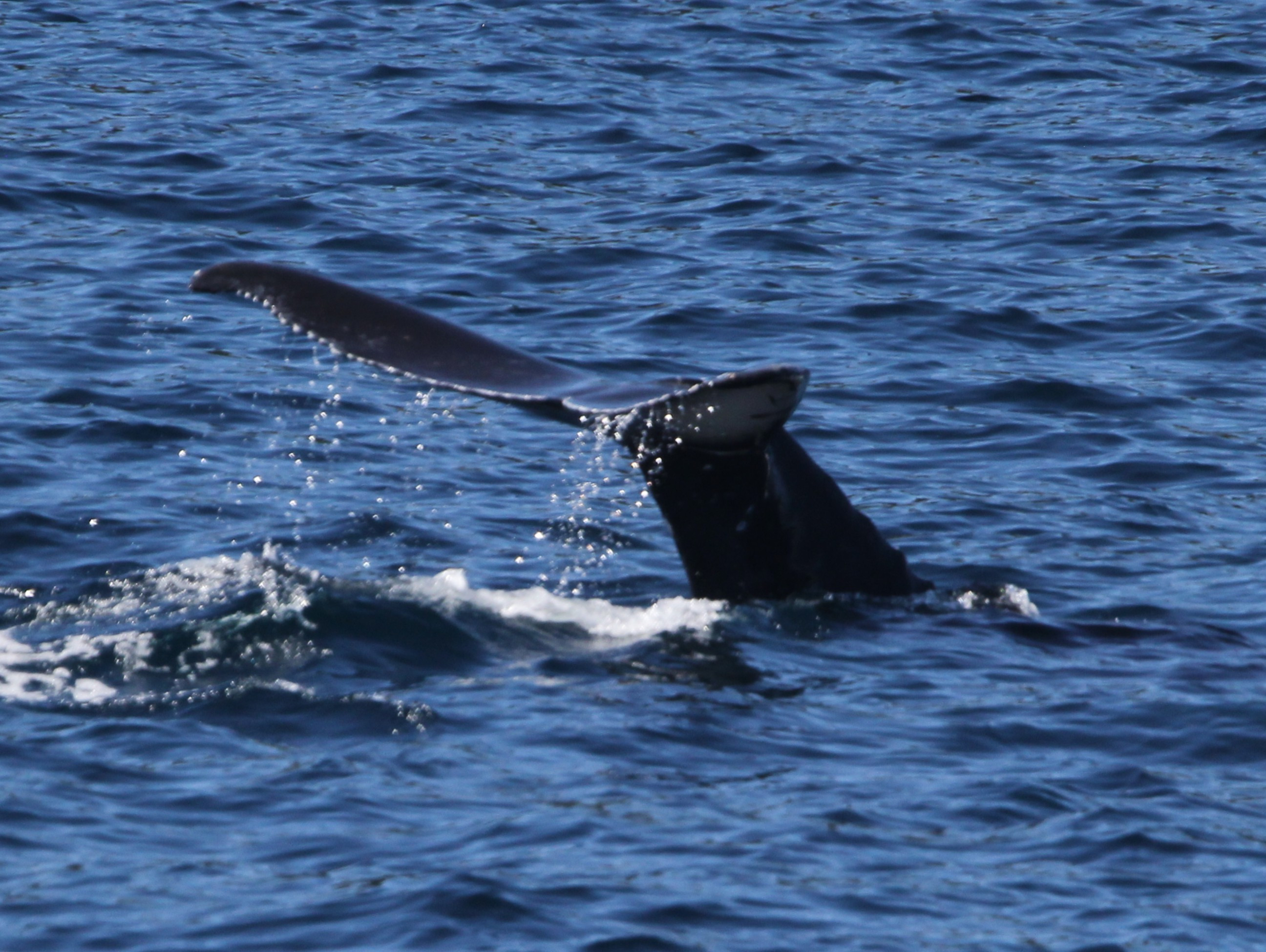
This course investigates how our value of whales and dolphins has changed over time (from consumption to conservation), and applies the concepts to other natural resources.
- Teacher: Peter Simard
Category: Spring Term 2026
The Tampa Bay area is well known for its diversity and abundance of birds in the winter. In this class students will learn to identify all species of birds that overwinter in Florida, their natural history and threats to their persistence. In addition, students will learn a variety of techniques used to study bird abundance and behavior and will participate in several national ornithological studies. Students will learn through lectures, field trips, and independent field research projects.
- Teacher: Beth Forys
Category: Spring Term 2026
Local Wilderness Conservation is a field based course which asks: What habitats can be
found locally, and what flora and fauna live there? What are the endangered species that
rely on local green spaces, waterways, and beaches to survive? What is the significance
of these wild areas to local citizens? What are the main threats to these areas, and what
can we do to conserve them? To answer these questions many class meetings will be
outside: hiking, kayaking, doing outdoor conservation projects, and giving
on-site student presentations. Students will also conduct research outside of class and
create a project.
Students will emerge from this class with new eyes for the critical importance of the
wilderness in St Petersburg- and in urban areas in general- both from a scientific and
personal perspective.
found locally, and what flora and fauna live there? What are the endangered species that
rely on local green spaces, waterways, and beaches to survive? What is the significance
of these wild areas to local citizens? What are the main threats to these areas, and what
can we do to conserve them? To answer these questions many class meetings will be
outside: hiking, kayaking, doing outdoor conservation projects, and giving
on-site student presentations. Students will also conduct research outside of class and
create a project.
Students will emerge from this class with new eyes for the critical importance of the
wilderness in St Petersburg- and in urban areas in general- both from a scientific and
personal perspective.
- Teacher: Hilary Flower
- Teacher: Jesse Sherry
Category: Spring Term 2026
Have you ever wondered what your hormones do, and why? What is the difference between the pill and an IUD? Why is puberty important? This course will offer a fun and scientifically-sound answer to those questions and more! We will discuss the hormones that regulate reproductive systems, the medicines used to control those hormones, and discuss normal biology plus diseases associated with reproductive systems. Students will explore these topics through selected texts and articles, as well as in class discussion and a group project.
- Teacher: Whitney Bullock
Category: Spring Term 2026
The purpose of this course is to provide a hands-on experience studying the diversity of animals and plants found at Eckerd College. This includes regular outdoor activity performing biodiversity surveys outdoors, identification techniques in the lab, and data analysis.
- Teacher: David Durieux
Category: Spring Term 2026
Cosmic Perspective is a foundational astronomical course designed to provide students with both academic rigor and hands-on engagement in exploring the universe. This course introduces students to the fundamental concepts of astronomy, including celestial mechanics, the solar system, stars, galaxies, cosmology, and the nature of space and time. It emphasizes observation, critical thinking, and the human relationship to the cosmos. This course is for anyone who is curious about the universe, regardless of prior background in astronomy, math or physics.
- Teacher: Ehab Ahmed
Category: Spring Term 2026
Billing & Aid placeholder
Category: Spring Term 2026
TR Billing & Aid Placeholder
Category: Spring Term 2026
Kinematics and dynamics for linear and rotational motion, Newton's laws of motion, gravity. Concepts of work, energy, momentum, angular momentum and conservation laws. Oscillatory motion, fluids. Calculus based, with laboratory. Prerequisite: MA 131M (may be taken concurrently).
- Teacher: Eduardo Fernandez
Category: Spring Term 2026
Kinematics and dynamics for linear and rotational motion, Newton's laws of motion, gravity. Concepts of work, energy, momentum, angular momentum and conservation laws. Oscillatory motion, fluids. Calculus based, with laboratory. Prerequisite: MA 131M (may be taken concurrently).
- Teacher: Stephen Weppner
Category: Spring Term 2026
Temperature, gas laws, first and second laws of thermodynamics, entropy. Electric charge, fields, current, DC circuits. Magnetic fields and forces, Ampere's law, and Faraday's law of induction. Geometrical and physical optics. Calculus based with laboratory. Prerequisite: PH 241N and MA 131M.
- Teacher: Ehab Ahmed
Category: Spring Term 2026
Temperature, gas laws, first and second laws of thermodynamics, entropy. Electric charge, fields, current, DC circuits. Magnetic fields and forces, Ampere's law, and Faraday's law of induction. Geometrical and physical optics. Calculus based with laboratory. Prerequisite: PH 241N and MA 131M.
- Teacher: Ehab Ahmed
Category: Spring Term 2026
Temperature, gas laws, first and second laws of thermodynamics, entropy. Electric charge, fields, current, DC circuits. Magnetic fields and forces, Ampere's law, and Faraday's law of induction. Geometrical and physical optics. Calculus based with laboratory. Prerequisite: PH 241N and MA 131M.
- Teacher: Ehab Ahmed
Category: Spring Term 2026
Temperature, gas laws, first and second laws of thermodynamics, entropy. Electric charge, fields, current, DC circuits. Magnetic fields and forces, Ampere's law, and Faraday's law of induction. Geometrical and physical optics. Calculus based with laboratory. Prerequisite: PH 241N and MA 131M.
- Teacher: Ehab Ahmed
Category: Spring Term 2026
Temperature, gas laws, first and second laws of thermodynamics, entropy. Electric charge, fields, current, DC circuits. Magnetic fields and forces, Ampere's law, and Faraday's law of induction. Geometrical and physical optics. Calculus based with laboratory. Prerequisite: PH 241N and MA 131M.
- Teacher: Stephen Weppner
Category: Spring Term 2026
Temperature, gas laws, first and second laws of thermodynamics, entropy. Electric charge, fields, current, DC circuits. Magnetic fields and forces, Ampere's law, and Faraday's law of induction. Geometrical and physical optics. Calculus based with laboratory. Prerequisite: PH 241N and MA 131M.
- Teacher: Basu Lamichhane
Category: Spring Term 2026
First principles of analog and digital electronic circuit theory, basic operation of electronic circuits, instruments, utilizing modern electronic technique and instrumentation. Prerequisite: PH 242.
- Teacher: Basu Lamichhane
Category: Spring Term 2026
Introduction to computational science through physical, chemical, geological and biological examples. Modeling of various dynamical systems like planets, molecules and populations by programming a computer. Learning software programs to visualize results. Prerequisites: MA 131 Calculus I AND either CS 120, CS 130, or CS 143. Fulfills a computational science minor requirement.
- Teacher: Michael Hilton
Category: Spring Term 2026
Particles and rigid bodies, elastic media, waves, Lagrangian and Hamiltonian formulations of dynamics. Prerequisites: PH 242 and MA 234N.
- Teacher: Eduardo Fernandez
Category: Spring Term 2026
Various systems for judging good and bad, right and wrong. Definitions of the good life, ethical theories and their application to issues such as abortion, civil rights, war and peace, censorship, etc.
- Teacher: Louise Daoust
Category: Spring Term 2026
Animal Ethics examines our responsibilities to other species, the intrinsic value of nature, the historical roots of anthropocentrism, and the ethics of the use of animals to further the ends of human beings.
- Teacher: Jason Sears
Category: Spring Term 2026
A critical exploration of various conceptions of nature from the ancient world to the present. What nature is, how it can be studied, how we should relate to it. Primary approach is critical, historical analysis of primary texts.
- Teacher: Nathan Andersen
Category: Spring Term 2026
Experiencing love and facing our mortality compel us to ask fundamental questions concerning human existence. This course considers how ancient and modern philosophy construct our conceptions of intimacy, friendship, death, and the afterlife.
- Teacher: Jason Sears
Category: Spring Term 2026
American democratic theory, political parties, interest groups, presidential selection and functions, Congress, Supreme Court, federal bureaucracy, and several major areas of policy making conducted by the national government.
- Teacher: Katti McNally
Category: Spring Term 2026
Origins and structure of the international system; key actors, theories and concepts; global issues facing states and citizens, such as war, wealth and poverty, hunger and environment, and global justice.
- Teacher: Michael Burch
Category: Spring Term 2026
Comparing national governments and politics by looking at development/political economy, nationalism, ethnicity, culture, gender, democratization, political institutions, state-society relations, parties. Cases include: UK, France, Germany, Japan, China, others.
- Teacher: Allison Quatrini
Category: Spring Term 2026
The World Cup is the globe’s most popular sporting event. What are the political, humanitarian, and economic ramifications of the 2026 event for the world? Will use soccer to explore topics such as war, corruption, migration, inequality, and nationalism.
- Teacher: Michael Burch
Category: Spring Term 2026
State and non-state actors’ roles in environmental issues in Global South regions: Asia, Africa, Middle East, Latin America/Caribbean. Key issues include the impact of slavery, energy production, food safety, traditional practice, indigenous knowledge, climate change.
- Teacher: Allison Quatrini
Category: Spring Term 2026
A review of three approaches to IPE: realist, liberal, and historical-structuralist. Four areas of world economic activity: trade, investment, aid and debt, and how global changes since WWII influence development choices for less developed countries.
- Teacher: Mary Meyer McAleese
Category: Spring Term 2026
Examining those portions of the Constitution dealing with relations between the individual and the government (the Bill of Rights, due process, equal protection, privileges and immunities, etc.). PO 301S is not prerequisite. One lower-division political science course recommended.
- Teacher: Katti McNally
Category: Spring Term 2026
Historical and contemporary relationship of women to politics in the US and around the world. Evolution of the women's movement and participation of women in politics. Impact of women's movement at the global level. Prerequisite: Sophomore standing or above.
- Teacher: Mary Meyer McAleese
Category: Spring Term 2026
Senior Seminar for political science majors. Seminar style course. Senior writing and oral communication proficiency with group work are the
basic features of the course. Required for graduation. Prerequisite: Senior standing.
basic features of the course. Required for graduation. Prerequisite: Senior standing.
- Teacher: Michael Burch
Category: Spring Term 2026
The course seeks first to provide an understanding of British political institutions - the constitution, the party systems, the workings of government - and secondly, an insight into the main political debates facing Britain, including the media, the conflict in Northern Ireland and issues of race and gender. Special attention will be given to the discussion of current political developments as they happen.
- Teacher: Scott Kelly
Category: Spring Term 2026
The scientific study of human behavior and cognitive processes, including biopsychology, learning, memory, motivation, development, personality, abnormality, and social processes.
- Teacher: Katherine Dyer
Category: Spring Term 2026
First part of a two-semester sequence that integrates basic statistics with principles of research design. Emphasis on descriptive statistics, correlation and regression, and ethics of psychological research. Introduction to SPSS and writing in APA format. Prerequisites: PS 101S and Sophomore standing.
- Teacher: Briana Harvey
Category: Spring Term 2026
Second part of two-semester sequence that integrates basic statistics with the principles of research design. Emphasis on inferential statistics, observational research, survey methodology, and experimentation. Continued instruction in SPSS and writing in APA format. Prerequisite: PS200.
- Teacher: Lauren Highfill
Category: Spring Term 2026
Second part of two-semester sequence that integrates basic statistics with the principles of research design. Emphasis on inferential statistics, observational research, survey methodology, and experimentation. Continued instruction in SPSS and writing in APA format. Prerequisite: PS200.
- Teacher: Stephanie Mallinas
Category: Spring Term 2026
Integrative study of human development from conception through adolescence. Examines physical, cognitive, social, and emotional facets of development, including peer and family relationships, personality development, and contemporary issues. Prerequisite: PS 101S.
- Teacher: Briana Harvey
Category: Spring Term 2026
Examination of thoughts and behaviors that deviate from the social norms, are maladaptive, and/or cause distress. Emphasis on etiology and treatment of psychological disorders from a biopsychosocial perspective. Prerequisite: PS 101S or HD 101S.
- Teacher: Briana Harvey
Category: Spring Term 2026
Examination of thoughts and behaviors that deviate from the social norms, are maladaptive, and/or cause distress. Emphasis on etiology and treatment of psychological disorders from a biopsychosocial perspective. Prerequisite: PS 101S or HD 101S.
Category: Spring Term 2026
Integrative study of sensory perception, with an emphasis on individual differences and cognitive factors that affect perception. Topics include vision, hearing, taste, smell, touch, pain, and vestibular perception. Prerequisite: PS 101S
- Teacher: Katherine Dyer
Category: Spring Term 2026
Study of the psychological, physiological, and behavioral factors in the etiology and prevention of illness. Topics studied include stress and coping, mind-body relationships, pain management, and health promotion. Prerequisite: PS 101S.
- Teacher: Sarah Lyle
Category: Spring Term 2026
Study of the individual in a social environment, with an emphasis on the experimental approach to understanding the impact of social forces. Topics covered include group influence, attraction, aggression, attitude formation and change, and altruism. Prerequisites: PS 101S.
- Teacher: Stephanie Mallinas
Category: Spring Term 2026
Application of neurological and neurophysical principles to understanding human behavior and thought, emotion and motivation, learning and memory. Prerequisite: PS 101S and junior standing.
- Teacher: Katherine Dyer
Category: Spring Term 2026
Study of the social, cognitive, and biological underpinnings of political ideology and behaviors. Topics covered include the development of political ideology, political prejudice, misinformation, and collective action. Prerequisite: PS 101S.
- Teacher: Stephanie Mallinas
Category: Spring Term 2026
Study and application of the science of psychological wellbeing. Neurological foundations, research on specific strategies to promote subjective wellbeing and resilience to stress, and specific, effective techniques to build a healthy lifestyle. Pre-requisite: junior standing.
- Teacher: Sarah Lyle
Category: Spring Term 2026
INSTRUCTOR PERMISSION REQUIRED. Field work in the community which allows for the practical application of psychological principles. Requires 130 hours of supervised work in a clinical setting. Prerequisite: Junior or senior standing and permission of instructor. May be repeated for credit (PS 444).
- Teacher: Sarah Lyle
Category: Spring Term 2026
Participation in faculty-led research. Students will spend 9 hours per week engaged in research activities with a faculty member and lab team. Requires permission of instructor to enroll. Prerequisites: PS 200 with a grade of B or higher.
- Teacher: Stephanie Mallinas
Category: Spring Term 2026
Primarily for students pursuing the BS degree in psychology. Experience in designing and conducting research. Prerequisite: PS 321.
- Teacher: Sarah Lyle
Category: Spring Term 2026
Advanced participation in faculty-led research. Students will spend 9 hours per week working on an original research project with a faculty member and lab team. Requires permission of instructor to enroll. Prerequisites: PS 201M with a grade of B or higher and PS 360.
- Teacher: Stephanie Mallinas
Category: Spring Term 2026
Offered each Winter Term and required for psychology majors intending to graduate in the upcoming semester. Written examination covering all areas required for the BA in psychology and an oral presentation of major research project in the field. Only open to students who have passed the writing competency requirement.
- Teacher: Lauren Highfill
Category: Spring Term 2026
Offered each Winter Term and required for psychology majors intending to graduate in the upcoming semester. Written examination covering all areas required for the BA in psychology and an oral presentation of major research project in the field. Only open to students who have passed the writing competency requirement.
- Teacher: Lauren Highfill
Category: Spring Term 2026
This course examines charismatic and Pentecostal Christian practices around the world, including speaking in tongues, miraculous healings, demonic possession and deliverance, and more. Focus will be on the contemporary world, with some historical context.
- Teacher: Charlie McCrary
Category: Spring Term 2026
An introduction to the principles and methods of sociology, as well as important research findings.
- Teacher: Christopher Brown
Category: Spring Term 2026
Introduction to quantitative techniques for data analysis in the social sciences. Univariate description, bivariate description, and statistical inference.
- Teacher: Lisa Miller
Category: Spring Term 2026
The causes and consequences of crime, the historical transition of ideas about crime, types of crime such as street level, organized, corporate, government; the measurement of crime and criminal deterrence.
- Teacher: Christopher Brown
Category: Spring Term 2026
How social structures alter the environment and the environment constrains societies. How inequalities of class, race affect experiences of environmental degradation. How social movements reduce environmental harms. Investigates these issues in the Tampa Bay area.
- Teacher: Nicholas Dempsey
Category: Spring Term 2026
This course investigates how society shapes people's sexual behaviors, desires, and identities, along with norms and attitudes surrounding sexuality. Topics include LGBT issues, hook-up culture, kink, intersectionality, schools, the law, the media, and sex work.
- Teacher: Lisa Miller
Category: Spring Term 2026
Continuation of SP 101. Completion of SP 102 fulfills the one year language requirement. Prerequisite: SP 101 or equivalent.
- Teacher: Maribel Perez
Category: Spring Term 2026
Continuation of SP 101. Completion of SP 102 fulfills the one year language requirement. Prerequisite: SP 101 or equivalent.
- Teacher: Axel Presas
Category: Spring Term 2026
Continuation of SP 101. Completion of SP 102 fulfills the one year language requirement. Prerequisite: SP 101 or equivalent.
- Teacher: Maribel Perez
Category: Spring Term 2026
Continuation of SP 101. Completion of SP 102 fulfills the one year language requirement. Prerequisite: SP 101 or equivalent.
- Teacher: Talina Ugarte
Category: Spring Term 2026
Continuation of SP 101. Completion of SP 102 fulfills the one year language requirement. Prerequisite: SP 101 or equivalent.
- Teacher: Talina Ugarte
Category: Spring Term 2026
Continuation of SP 101. Completion of SP 102 fulfills the one year language requirement. Prerequisite: SP 101 or equivalent.
- Teacher: Talina Ugarte
Category: Spring Term 2026
Development of oral expression skills through discussion of social and environmental issues in Latin America, Spain, and the US. Prerequisites: SP 207, SP 311H, or instructor's permission.
- Teacher: Axel Presas
Category: Spring Term 2026
Offered during the Spring for seniors having fulfilled or in the process of finalizing completion of all Spanish requirements in this semester. Consists of Standardized Proficiency Exam and a creative, individualized, content-based language product that can be shared with the community at large.
- Teacher: Axel Presas
Category: Spring Term 2026
- Teacher: Nathan Andersen
Category: Spring Term 2026
Exploration of the potentials for use of the body, mind, voice, movement, energy, and sensory awareness through a wide range of creative exercises.
- Teacher: Cindy Totten
Category: Spring Term 2026
This course examines the many aspects of producing a play through the study of functions of the playwright, actors, director, and design team. Students will gain a basic knowledge of the process of creating a play, from first draft to final curtain, through a series of exercises and readings, and by watching productions of plays.
- Teacher: Kyle Ransbottom
Category: Spring Term 2026
An experiential course replicating a working film set where camera acting is taught through acting exercises, readings, and filmed and edited scenes shot on digital cameras.
- Teacher: Gavin Hawk
Category: Spring Term 2026
An intensive laboratory experience in play production. Work in a single area such as assistant directing, stage management, costuming, lighting, sound, box office, or publicity. Course requires extensive out of class group work. Open to all students.
- Teacher: Kyle Ransbottom
Category: Spring Term 2026
Directed study course where students receive credit for their work and study on Eckerd College Theatre's productions. Students will learn new technical theatre skills during planning, rehearsals and performances. Instructor permission required.
- Teacher: Kyle Ransbottom
Category: Spring Term 2026
Focus on study of advanced acting styles or techniques, with an emphasis on their practical application.
- Teacher: Gavin Hawk
Category: Spring Term 2026
This course focuses on academic/practical study in areas of scenic painting and other elements of scenic art like carving/sculpting.
- Teacher: Kyle Ransbottom
Category: Spring Term 2026
Exploration of Shakespeare through acting exercises: style, language, imagery, actions, storytelling, physicality, emotions, characterization. Students perform Shakespeare scenes, monologues, and sonnets.
- Teacher: Cindy Totten
Category: Spring Term 2026
Students will demonstrate skills in Dramaturgy, Acting, and Design through a sequence of written and creative assignments, and learn methods for finding professional work in the entertainment business. Theatre majors only.
- Teacher: Rick Tetrault
Category: Spring Term 2026
This course is designed for students pursuing the 2 + 2 Musical Theatre or Theatre BFA degree to increase skills in ballet, jazz, tap, and/or other musical theatre dance styles. Participation in both fall and spring semesters for a total of one course credit.
- Teacher: Dakota Kuharich Stevenson
Category: Spring Term 2026
SPECIAL PERMISSION REQUIRED FROM GLOBAL ED TO REGISTER. UNAPPROVED STUDENTS WILL BE DROPPED. This "Spring into Summer," Study Abroad course considers how the inclusion of animals and animalistic performance informs our understanding of various worldviews, philosophies, religions, and aesthetics from the Elizabethan period to now. Global Perspective.
- Teacher: Jessica Thonen
Category: Spring Term 2026
London theatre, including backstage tours and guest lectures, covering drama from classical to modern. For students with a general interest in theatre, of whatever major.
- Teacher: Shirley Day
Category: Spring Term 2026