Price theory, operation of market system. Industrial structure and pricing under different competitive structures. Credit will be given for only one of EC 280S or EC 281S.
Price theory, operation of market system. Industrial structure and pricing under different competitive structures. Credit will be given for only one of EC 280S or EC 281S.
Price theory, operation of market system. Industrial structure and pricing under different competitive structures. Credit will be given for only one of EC 280S or EC 281S.
Price theory, operation of market system. Industrial structure and pricing under different competitive structures. Credit will be given for only one of EC 280S or EC 281S.
Application of microeconomic principles to contemporary environmental policy issues such as air and water pollution, global climate change, and toxic waste. Exploration of cost benefit analysis and methods to value environmental amenities. Prerequisite: one of EC 201S, EC 280S, or EC 281S.
Continuation of EC 281S. Theoretical basis for consumer demand, firm production and costs, pricing and output decisions of firms within market structures. Algebraic and graphical models. Explore empirical techniques for estimating demand. Prerequisite: EC 280S or EC 281S.
Continuation of EC 282S. Determinants of aggregate demand and supply, using dynamic and static models of analysis. How to use an understanding of economic analysis to achieve policy objectives and understand trade-offs. Prerequisites: EC 282S and MN 260M.
History and development of monetary system and financial structure. Money creation and influence on macroeconomic activity. Monetary policy implications of regulatory agencies with specific emphasis on the Federal Reserve. Prerequisite: EC 282S.
Focuses on the stages in the entrepreneurial process (search, growth, integrating), introduces Human-centered Design Thinking, developed to arrive at solutions that are desirable, feasible and viable; turning ideas into action with the power of persistence. Prerequisites: EN 204S and MN 260M.
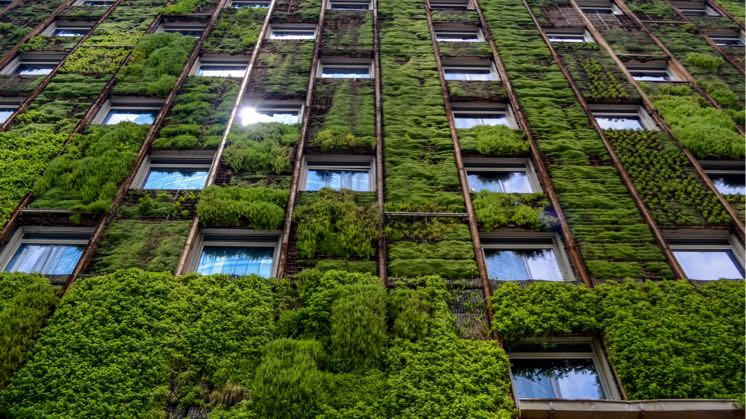
Learn basic design principles and apply these principles to product, building, neighborhood, and energy system design with a focus on minimizing environmental impact.
Citizen Science uses trained volunteers to expand the ability of scientists to answer questions about our world. In this class you will evaluate and participate in outdoor and internet-based citizen projects.
Analysis of food production, distribution, and consumption from the local to the global scale with an emphasis on the environmental, nutritional, social, and political-economic challenges of contemporary food systems.
Analysis of food production, distribution, and consumption from the local to the global scale with an emphasis on the environmental, nutritional, social, and political-economic challenges of contemporary food systems.
Study of ways in which humans affect and are affected by the environment, with focus on biology. General ecology, population, genetics, identification, and use of natural resources, pollution, social institutions, ethics.
Seabirds nest directly on Florida beaches where they are often disturbed by people and predators. Students will educate the public near a bird colony and collect data on the effectiveness of their stewarding. This course fully satisfies the College's RSL requirement (20+ hrs).
Introduction to wildlife policies and contemporary social and political debates in wildlife management. Conduct case study analysis, critically evaluate real-world wildlife dilemmas, and make reasoned recommendations regarding policy actions. Prerequisites: sophomore standing and ES 172.